
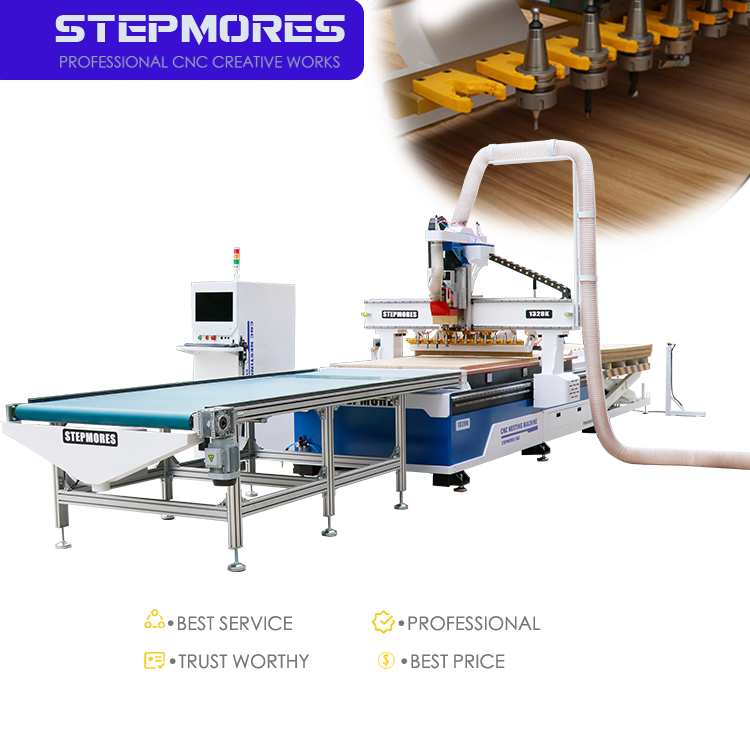
The Evolution of Precision Manufacturing
Transitioning from manual techniques to high-speed digital fabrication represents a significant milestone in modern manufacturing. Historically, the pursuit of complex joinery and intricate detailing relied heavily on the manual manipulation of tools and the physical limits of the operator. Today, the professional landscape is defined by the capabilities of the CNC wood router. Experience in high-precision engineering environments clearly demonstrates that the transition to professional machinery is fundamentally about mechanical consistency. When a machine is engineered with professional tolerances, the result is a move toward high-fidelity manufacturing, where every cut, groove, and contour aligns with the digital model. This evolution demands equipment that performs under the stress of continuous, high-volume operational cycles without losing its geometric integrity.
Engineering Dynamics: The Physics of CNC Stability
The backbone of any professional CNC wood router is the chassis. If the foundation of the machine lacks rigidity, the precision of the spindle becomes irrelevant. A heavy-duty steel frame is required to act as a structural damper, absorbing the kinetic energy and micro-vibrations produced during high-speed routing. Professional-grade machines utilize stress-relieved steel, which prevents the frame from warping or twisting under fluctuating thermal conditions. When a frame is engineered for mass and resonance dampening, it ensures that the tool bit encounters the material with stability rather than vibration. This physics-based approach to design is what separates a professional tool from a light-duty one, ensuring that the router remains a permanent, reliable asset, capable of maintaining sub-millimeter tolerances over years of operation.
Standardizing Performance: Drive Systems and Control Logic
Precision is a function of the drive system. In a professional production environment, backlash—the slight, unwanted movement between mechanical components—is a primary concern. High-end routers utilize precision-engineered ball screws or helical rack-and-pinion systems that provide smooth, constant force transfer across all axes. These mechanical systems must be paired with high-torque servo motors, which provide the digital intelligence to correct positional errors in real-time. Industrial standards for motion control prioritize smooth acceleration and deceleration curves, which prevent mechanical stress on the machine while ensuring the toolpath remains fluid. When selecting a machine, professionals look for systems that utilize open-architecture controllers capable of executing high-density G-code, allowing for the rapid processing of complex 3D toolpaths without the processing lag often found in entry-level systems.
Material Dynamics and Spindle Optimization
The spindle is the primary link between the machine’s power and the raw material. Professional manufacturing requires the ability to switch between high-torque, low-speed cuts for substantial material removal and high-speed, low-vibration passes for intricate detailing. The most reliable spindles in the industry feature liquid-cooling systems, which maintain a consistent operating temperature. This thermal stability is critical; as a spindle heats up, its internal clearances change, potentially impacting the accuracy of the cut. By utilizing advanced spindle technology paired with an industrial variable frequency drive, operators gain the ability to dial in specific RPMs for different material densities. This level of optimization ensures that the tool edge remains sharp, the material finish is consistent, and the machine operates at peak mechanical efficiency.
Long-Term Asset Integrity and Operational Reliability
In a professional setting, uptime is a critical metric. Operational reliability depends on the quality of the electronic components and the machine’s ability to survive the environmental conditions of a production shop. Dust is a persistent factor in machining environments; therefore, professional machines must feature integrated dust collection ports and sealed electrical cabinets that prevent debris from entering the control logic. Furthermore, the use of industrial-rated cabling and protected sensor arrays is a necessity. Professional machinery should be built with modular, easy-to-service components, ensuring that routine maintenance is straightforward and that the machine can withstand the rigors of high-traffic production. Investing in these features is a commitment to the long-term utility of the equipment, preventing intermittent failures that degrade the performance of the system.
Stepmores: Architectural Integrity and Manufacturing Excellence
The selection of industrial machinery is a strategic decision that shapes the technical capacity of a business. Achieving consistent, professional results requires a machine that is engineered to a higher standard of structural and electrical precision. Stepmores operates at the intersection of sophisticated engineering and industrial application, focusing on the development of CNC solutions that prioritize structural stability, motion accuracy, and long-term operational resilience. By maintaining an uncompromising focus on the quality of raw materials, such as stress-relieved steel and high-grade drive components, Stepmores ensures that each router meets the technical benchmarks required for high-volume, precision manufacturing. Stepmores provides the logistical support and supply chain reliability necessary to integrate these complex systems into a productive environment. Through a combination of manufacturing expertise and a dedication to the longevity of the machine, Stepmores stands as a trusted resource for those who recognize that professional output is a direct reflection of professional-grade manufacturing, providing the necessary infrastructure to scale production while maintaining the highest level of geometric accuracy.
Table of Contents
- The Evolution of Precision Manufacturing
- Engineering Dynamics: The Physics of CNC Stability
- Standardizing Performance: Drive Systems and Control Logic
- Material Dynamics and Spindle Optimization
- Long-Term Asset Integrity and Operational Reliability
- Stepmores: Architectural Integrity and Manufacturing Excellence