
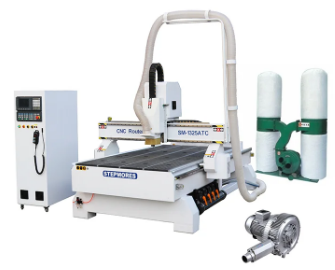
Unmatched Precision and Repeatability in Production
Sub-Millimeter Accuracy in Joinery, Panel Cutting, and Edge Profiling
Woodworking CNC routers can hit incredible precision levels around plus or minus 0.05mm when it comes to making joints, cutting panels, or shaping edges. Getting this kind of accuracy really matters for how strong the finished product will be. If there are gaps bigger than half a millimeter in things like dovetail joints or mortise and tenon connections, the whole piece just doesn't hold together properly anymore. The machines stay so accurate because they have solid construction, those fancy high resolution linear guides, and the servo driven systems that keep everything moving precisely during complex 3D carvings. According to those ISO 230-2 tests that measure machine performance, these routers cut down defects by almost 90 percent compared to what people could do manually. What this means practically is that designs that used to cost too much to produce, like intricate parametric cabinets or detailed multi axis carvings, suddenly become possible to make in batches without breaking the bank.
Real-World Benchmark: Cabinet Door Batch Production at ±0.15 mm Tolerance
When making cabinet doors, modern CNC routers maintain around 0.15mm accuracy throughout entire production batches, which is about as thin as two pieces of regular printer paper stacked together. What does this mean for actual products? The joints between rails and stiles fit together flawlessly, those little grooves for panels line up just right, and hinge mortises match up perfectly on each door. No need for extra sanding or inserting shims after machining anymore. Take a standard batch of fifty Shaker style doors for instance. Every single component matches exactly in size, so when workers put them together at the end, everything fits without hassle. Assembly time drops roughly forty percent because nothing needs adjustment. Why such consistency? Because the designs move straight from computer aided drafting software to the router controls without anyone having to interpret measurements manually or rely on templates. For companies building modular furniture systems where parts need to work across different production runs, this kind of dependable performance becomes absolutely essential.
Dramatically Faster Time-to-Market with CNC Wood Router
End-to-End Workflow: From CAD Design to Finished Part in Under 90 Minutes
CNC wood routers these days really cut down on how long it takes to make things because they automate all those steps like cutting, drilling, and shaping everything in one go without anyone needing to watch over them constantly. When someone loads up a good CAD design into the system, the router just goes ahead and does all the work on its own. No more worrying about measurements going off track, tools getting out of whack, or tired workers making mistakes. Take something complicated like a fancy curved table leg that needs several cuts and different hole patterns throughout. With modern equipment, such parts can go from being just lines on a computer screen to actual finished products within roughly an hour and a half. The faster production means companies can test prototypes right there on the same day and respond quickly when designers want changes made. This whole process speeds things up so much that products reach customers sooner than ever before.
CAD/CAM Integration Cuts Prototyping Cycles by Up to 65%
When CAD/CAM systems work together seamlessly, they cut out all those tedious manual steps for creating toolpaths and dealing with reprogramming holdups. Whenever there's a design change, the machining instructions just update themselves automatically. The geometry stays intact but the system also fine tunes things like how fast the machine cuts, how deep it goes into material, and picks the right tools for the job. According to some stats we've seen from the Manufacturing Extension Partnership under the US Commerce Department, companies that integrate these systems typically slash their prototyping time by around two thirds compared to old school methods. Take chair leg molds as an example. What used to take days can now be done within hours. This means factories can try out anywhere from three up to five different designs where before they might only get through one iteration. Such speed really helps validate products faster in the marketplace and gets new items launched months ahead of schedule rather than waiting weeks on end.
Unlocking Complex, Custom Designs at Scale
Economical Production of 3D Carvings, Nested Curves, and Organic Forms
Woodworking shops are finding that CNC routers make it possible to create intricate designs without breaking the bank on labor costs. A botanical relief panel that would take anywhere from 12 to maybe even 15 hours of careful hand carving can be replicated exactly by a CNC system in just around 10 minutes flat. The machines keep things consistent too, with tolerances staying within about 0.08 millimeters throughout entire production runs. These routers come with smart software that cuts down on wasted materials by roughly 25 percent. Plus their multi-axis capabilities let craftsmen produce all sorts of detailed work including curved surfaces, interlocking shapes, and those flowing organic forms that used to only show up in custom made pieces. What this means is that what was once considered luxury bespoke design elements like parametric building exteriors or seats shaped for comfort can now actually be manufactured at scale and sold profitably. Small to medium sized operations are starting to stand toe to toe with high end artisan studios when it comes to design quality, yet they maintain the kind of output volume typically seen in factories.
Key advantages include:
- Elimination of specialized carving labor for repetitive, high-fidelity tasks
- Near-zero material waste through intelligent nesting and kerf compensation
- Consistent quality across batches—even with extreme geometric complexity
The result is not just faster production, but expanded creative and commercial opportunity: premium customization becomes a core revenue stream—not a margin-eroding exception.
Strategic Labor Transformation, Not Replacement
When shops adopt CNC wood routers, it actually creates new opportunities for workers rather than pushing them out of jobs. Instead of spending all day manually cutting wood, operators take on different responsibilities these days. They work with computer models, plan how tools should move through materials, design fixtures, and check product quality while things are still being made. This change cuts down on backbreaking work that causes injuries at the shop floor. Safety reports show workplace accidents drop around 40% after implementing proper safety protocols alongside CNC machines. Shops that fully integrate CNC technology tend to keep their staff longer too, about 30% better retention rates according to industry data. Craftsmen learn both old school woodworking techniques and modern digital manufacturing methods, becoming something like bridge builders between tradition and tech. While CNC handles the exact measurements and repetitive cuts, skilled workers focus on what looks good and solves specific problems unique to each project. The combination makes manufacturing setups stronger and better prepared for whatever comes next in this ever changing industry landscape.
Frequently Asked Questions
1. What is the accuracy level of woodworking CNC routers?
Woodworking CNC routers can achieve precision levels of around plus or minus 0.05mm, which is critical for the strength and integrity of the finished product.
2. How do CNC routers improve production time?
CNC routers automate the manufacturing process by performing cutting, drilling, and shaping tasks in a streamlined manner, significantly reducing production time.
3. What advantages do CAD/CAM systems offer in woodworking?
CAD/CAM systems automate toolpath creation and adjust to design changes automatically, cutting prototyping cycles by up to 65%, and ensuring high-quality output.
4. Do CNC routers replace manual labor in workshops?
Rather than replacing manual labor, CNC routers shift the roles of workers towards technical, design, and quality assurance tasks while reducing physical strain and injury risks.