
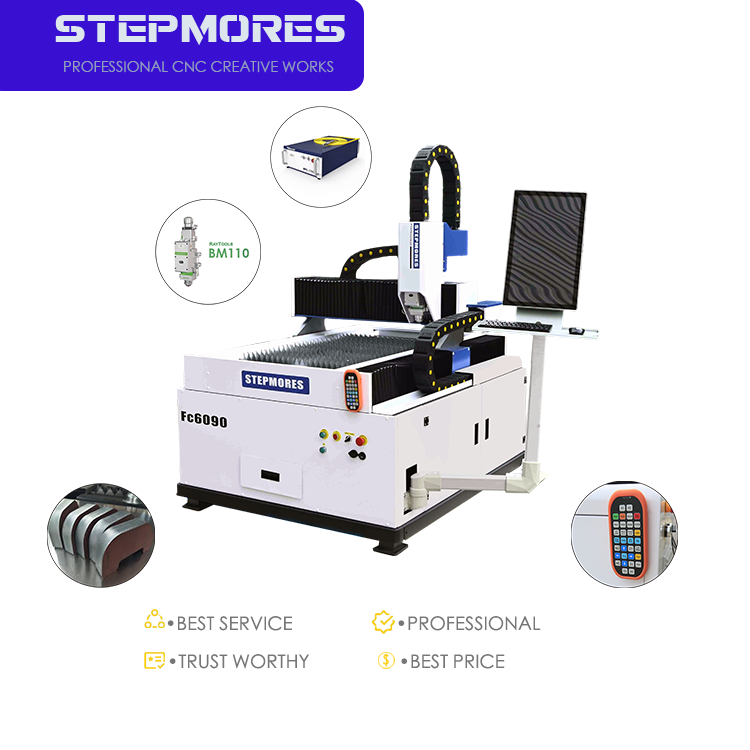
Superior Speed and Operational Efficiency
High Beam Quality and Automated Setup Reduce Cycle Times
Fiber laser cutters work really well because they have great beam quality and come with built-in automation features. The laser itself is super focused at around 1 micrometer, which means it cuts materials with incredible precision. Less wasted material and faster cutting times are the result. Some tests show these machines can cut up to 70% faster than older methods, though actual results depend on what's being cut. Many models now include automatic nozzle changers and smart material handling systems that take care of most tasks without needing constant operator attention. All this adds up to fewer interruptions during production runs. For manufacturers running large volume operations, maintaining steady output quality becomes much easier when equipment doesn't break down so often. Every minute saved translates into real money for businesses competing in tight markets.
3x Faster Cutting on Thin Stainless Steel vs. CO₂ Lasers: Verified Throughput Gains
For thin stainless steel work below 5mm thick, CNC fiber lasers can cut material three times quicker compared to traditional CO2 systems. Why? Because fiber lasers absorb better in reflective metals like stainless steel, which means no frustrating beam distortion issues or wasted energy that plague CO2 setups. Real world tests across multiple industries back this up showing consistent ±0.05mm accuracy even when running at maximum speed. This lets factories knock out big production runs about half as fast as before, cutting down on what each part actually costs to make. Plus there's another bonus nobody talks about much but everyone appreciates: those fiber lasers create a much smaller heat affected zone, so parts don't warp during processing. That means fewer rejected pieces going through the system and no need for costly second passes to fix problems.
Precision, Repeatability, and Minimal Thermal Distortion
Sub-0.1 mm Tolerances Enable High-Fidelity Parts for Aerospace and Medical Applications
Fiber laser cutting machines for CNC work can hit dimensional tolerances below 0.05 mm which makes them ideal for making parts that need to be super precise. This matters a lot in fields like aerospace and medical devices where even tiny mistakes can cause big problems with how things function or meet regulations. Traditional methods have issues with vibrations and tools wearing down over time but fiber lasers cut without touching the material directly. They also use sophisticated computer controls that keep results consistent from one batch to another. One major company in the aerospace industry saw their parts match specifications 99.8 percent of the time when they switched to these laser systems. That means no extra machining was needed at all for those 10,000 units they produced. The ability to reproduce complicated shapes consistently is really important for manufacturing medical equipment that needs FDA approval as well as turbine parts that must pass EASA standards.
How Fiber Optics Deliver True 'Cold Cutting' — Low HAZ Without Sacrificing Power
Fiber lasers operate at around 1 micrometer wavelength, which gets absorbed much better by metal surfaces compared to the 10.6 micrometer beams from CO2 lasers. This means faster vaporization happens with less heat spreading outwards. The area affected by heat ends up about 70 percent smaller than what we see with traditional cutting techniques. When working with shiny metals such as copper or brass that tend to develop hardened edges or tiny cracks under normal heat exposure, the so called "cold cutting" process actually maintains the material's original properties and keeps dimensions stable throughout. With sheets between 0.1 and 2 millimeters thick, parts come out with smooth edges straight from the machine, no need for additional finishing work. At the same time, these lasers still pack enough power to cut quickly and cleanly through various materials.
Lower Total Cost of Ownership Over Time
5-Year TCO Analysis: 40% Fewer Consumables and 60% Less Energy Than CO₂ or Plasma Systems
Looking at operations over about five years, CNC fiber laser cutting machines really stand out when it comes to total cost of ownership. These machines use around 60 percent less power compared to traditional CO2 lasers or plasma cutters, which obviously cuts down on electricity bills. Plus they need about 40% fewer replacement parts because their design is simpler with better built components. There's no need for special laser gases, cooling requirements are much lower, and there's no hassle with aligning mirrors or maintaining gas purity standards that eat into daily budgets. The Machining Industry Report from 2023 actually showed that most manufacturers end up saving roughly seventy four thousand dollars just on energy costs and consumables during this timeframe. What makes fiber lasers even better than plasma systems is that while plasma cut quality tends to get worse as nozzles wear out over time, fiber lasers keep making precise cuts without much degradation in their consumables. This means companies see returns on investment faster and stay competitive in the market for longer periods.
Unmatched Material Versatility — Especially with Reflective Metals
Direct Fiber Delivery Enables Reliable Cutting of Copper, Aluminum, and Brass
When it comes to cutting those tricky reflective metals, CNC fiber laser cutters really shine where CO2 lasers struggle. These machines work differently because they send the laser light right through flexible optical cables instead of relying on mirrors and complicated beam paths that can get damaged from reflections. And here's why it matters: the 1 micrometer wavelength gets absorbed much better by metals. This means manufacturers can process materials like copper, aluminum, and brass without all the headaches. Most CO2 lasers just bounce off these metals since they reflect away around 90% of their energy. For shops dealing with these challenging materials regularly, switching to fiber lasers makes a world of difference in both efficiency and reliability.
Operators can cut through copper that's up to 8mm thick and aluminum sheets as thick as 20mm while maintaining clean edges free from oxides. There's no beam distortion or drop in cutting performance during these operations. These kinds of capabilities matter a lot when manufacturing things like heat sinks for electronic devices made from copper, or structural parts used in aircraft construction from aluminum. The quality of the kerf directly impacts how well heat moves through materials, affects how long components last under stress, and determines the final surface appearance. When compared to plasma cutting or waterjet systems, fiber laser technology offers similar versatility but comes with almost no ongoing consumable expenses and creates very little heat affected zone. For small machine shops dealing with different types of metals in their workload, this makes fiber lasers particularly attractive options despite the initial investment cost.
FAQ Section
What makes fiber laser cutters faster than traditional methods?
Fiber laser cutters offer superior speed due to their high beam quality and automated setup, allowing for more precise and quicker material processing.
Why are fiber lasers better for cutting thin stainless steel?
Fiber lasers absorb better in reflective metals like stainless steel, resulting in less beam distortion and more efficient energy use compared to CO2 systems.
How do fiber lasers maintain low heat affected zones?
Fiber lasers operate at a wavelength that is better absorbed by metal surfaces, leading to faster vaporization with less heat spreading, reducing the heat affected zone.
What are the advantages of fiber lasers in terms of cost?
Fiber lasers offer lower total cost of ownership due to reduced power consumption and fewer consumable replacements compared to CO2 or plasma systems.
Can fiber lasers handle reflective metals like copper and brass?
Yes, fiber lasers have unmatched versatility, effectively cutting reflective metals like copper, aluminum, and brass without the challenges faced by CO2 systems.
Table of Contents
- Superior Speed and Operational Efficiency
- Precision, Repeatability, and Minimal Thermal Distortion
- Lower Total Cost of Ownership Over Time
- Unmatched Material Versatility — Especially with Reflective Metals
-
FAQ Section
- What makes fiber laser cutters faster than traditional methods?
- Why are fiber lasers better for cutting thin stainless steel?
- How do fiber lasers maintain low heat affected zones?
- What are the advantages of fiber lasers in terms of cost?
- Can fiber lasers handle reflective metals like copper and brass?