
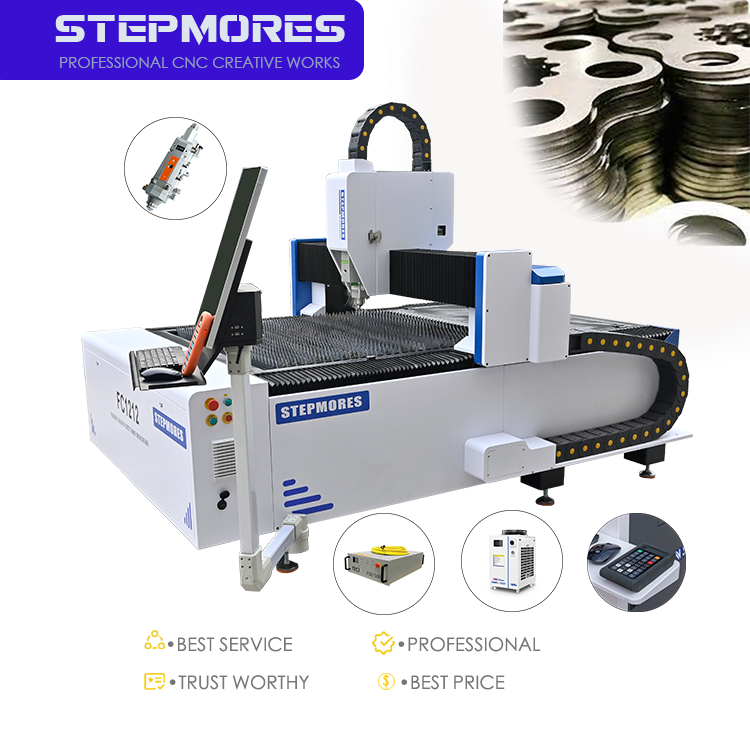
Unmatched Precision and Repeatability for Brand-Consistent Signs
Precision and repeatability are the cornerstones of advertising sign production that uphold brand integrity across multiple locations. A CNC cutting machine delivers these qualities through advanced motion control and a thermally stable, rigid mechanical design.
Sub-Millimeter Accuracy in Logo Cutting and Contour Tracing
At the heart of consistent signage lies the ability to cut every contour with sub-millimeter fidelity. Modern CNC routers achieve this through high-resolution linear encoders, real-time servo feedback, and temperature-compensated frames that correct positional errors within microns—delivering standard positioning repeatability of ±0.1 mm. This level of accuracy is essential for brand-critical details: thin serif fonts, interlocking channel letter returns, and intricate logo emblems, where even a 0.3 mm deviation creates visible gaps or misalignment. The digital motion controller maintains constant tool engagement through tight curves, preventing overshoot on swooshes or sharp corners—ensuring identical reproduction from sign to sign. Automatic tool calibration between cuts compensates for wear, preserving consistent cut width across an entire run. As a result, post-processing like filing or edge sanding is rarely needed, delivering a finish that reflects the brand’s quality standards. Furthermore, CNC systems store calibrated parameters per material—so a logo cut in acrylic today matches the same design cut in aluminum next month, preserving visual uniformity across substrates and batches. When consumers see perfectly aligned signage, it subconsciously signals attention to detail and reliability; even minor inconsistencies can erode trust. That’s why leading sign franchises and corporate branding teams mandate CNC-routed components for all exterior and interior signage programs. Ultimately, sub-millimeter precision ensures a brand logo is rendered exactly as designed—on every sign, in every location—transforming point-of-sale visibility into a unified brand statement.
Zero-Drift Batch Production: Delivering 100+ Identical Signs Without Calibration Drift
For large-volume orders, calibration drift undermines brand consistency. CNC cutting machines prevent this through a multi-layered stability system: closed-loop servos continuously compare actual tool position to CAD data, making micron-level corrections; glass-scale encoders and automatic tool-length probing eliminate cumulative error over hundreds of cycles. Thermal compensation adjusts for frame expansion—up to several microns per degree Celsius—by feeding sensor data to the controller, which dynamically offsets axis commands in real time. Tool-length probes also correct for micro-wear after each tool change, eliminating tolerance creep. The result? When fabricating 150 channel letter backs, the first and last parts are dimensionally identical—with perfect hole alignment and edge geometry. This zero-drift performance is critical for interlocking components like push-through letters or light-box panels, where even 0.2 mm of positional drift causes stack-up errors that compromise final assembly and break visual unity. A 2023 production survey found CNC routers reduced batch assembly rework by 40% because every part matched CAD specifications. For franchise networks operating under strict design guidelines, such repeatable accuracy isn’t optional—it’s mandatory. In short, a CNC cutting machine makes 100+ identical signs as reliable as a single prototype, preserving brand identity and customer trust at every location.
Broad Material Versatility with Optimized CNC Cutting Machine Performance
Cross-Material Throughput Analysis: ACM, Acrylic, PVC, Plywood, and Aluminum Composite
A CNC cutting machine excels across the full spectrum of signage substrates—each with distinct machining behaviors that impact throughput and edge quality. ACM (Aluminum Composite Material) supports high feed rates thanks to its layered structure, though tool wear must be monitored to avoid delamination. Acrylic requires slower speeds and specialized single-flute bits to dissipate heat and prevent melting—but when properly tuned, CNC setups produce edge-finished lettering up to 40% faster than conventional routing. PVC foams cut rapidly with minimal bit load, making them ideal for high-volume temporary signage. Plywood demands robust spindles and strong vacuum hold-down to minimize grain tear-out. Aluminum composite panels—widely used for durable outdoor signs—offer an excellent balance of machinability and weather resistance; some shops report a 25% increase in daily output after optimizing toolpaths for this material. This cross-material adaptability eliminates the need for multiple dedicated machines, reducing capital expense and floor space.
Material-Specific Toolpath Strategies for Flawless Edges (e.g., Chip-Free Acrylic Cuts)
Achieving flawless edges hinges on applying proven, material-specific toolpath strategies. For acrylic, a low-helix-angle cutter combined with climbing-cut direction and a final light finish pass yields chip-free, polished edges—often eliminating the need for secondary flame polishing. In ACM, a down-cut spiral bit with slight overlapping passes prevents lifting of the outer aluminum skin, while ramped entry avoids chipping the decorative surface. PVC benefits from shallow depth-of-cut and high spindle RPM to clear chips and prevent re-welding. For plywood, compression bits shear fibers both upward and downward, minimizing top- and bottom-splintering for clean, paint-ready edges. Advanced CNC systems allow operators to store and recall these optimized parameter libraries—enabling seamless transitions between materials without trial runs and ensuring consistent edge quality across entire batches.
Significant Time and Labor Savings vs. Manual Fabrication
Quantified Efficiency Gains: From 8-Hour Hand-Cut Channel Letters to 47-Minute CNC Batch Runs
Hand-cutting channel letters is labor-intensive: a skilled worker typically spends 8 hours cutting, trimming, and finishing a batch of 10 letters. With a CNC cutting machine, the same set takes just 47 minutes—reducing production time by over 90%. This acceleration translates directly into labor savings: one operator can oversee multiple machines simultaneously, removing bottlenecks tied to manual jigsawing, sanding, and repetitive measurement. For a shop producing 100 channel letters weekly, CNC reduces manual labor from 80 hours to under 8—freeing more than 280 hours per month for higher-value tasks like design refinement or assembly. Automated tool changes and preset toolpath strategies also reduce skill dependency, allowing junior staff to achieve senior-level output consistently. The outcome? Faster client turnarounds, lower overtime costs, and scalable capacity—without adding headcount.
Reduced Waste and Error Rates in High-Volume Sign Manufacturing
22% Less Material Scrap in LED Light Box Production — Validated by 2023 Industry Benchmark Data
High-volume sign manufacturing often suffers from costly material overruns and rework caused by manual cutting inconsistencies. Integrating a CNC cutting machine into LED light box production reduces material scrap by 22% on average, according to a 2023 industry benchmark. This reduction stems from automated precision: predetermined toolpaths eliminate deviations common in hand-routed cuts, ensuring each panel, acrylic face, and aluminum frame component meets exact specifications on the first attempt. Repeatable G-code execution prevents calibration drift across long batches, driving the error rate near zero. Intelligent nesting and minimized kerf waste further optimize sheet utilization—lowering raw material costs, reducing discarded stock, and creating a cleaner, more predictable production floor—without sacrificing speed or output volume.
FAQ
What makes CNC cutting machines precise and repeatable?
CNC cutting machines achieve unmatched precision and repeatability through advanced motion control systems, temperature-compensated frames, real-time servo feedback, and high-resolution linear encoders, which collectively ensure sub-millimeter accuracy.
Why is consistency in signage production important?
Consistency in signage production ensures brand integrity by delivering visually uniform signs across locations, which subconsciously signals reliability and attention to detail to consumers.
How do CNC cutting machines handle large-volume batch production?
CNC cutting machines eliminate drift and error in large-volume batch production through closed-loop servos, automatic tool-length probing, thermal compensation, and real-time corrections, ensuring all parts remain dimensionally identical.
What materials can CNC cutting machines handle?
CNC cutting machines are versatile and support a range of substrates, including ACM, acrylic, PVC, plywood, and aluminum composite panels, using optimized toolpaths for each material.
Is CNC cutting faster than manual fabrication?
Yes, CNC cutting significantly reduces labor and production time, achieving accelerated fabrication with consistent results compared to manual methods, such as hand-cutting channel letters.