
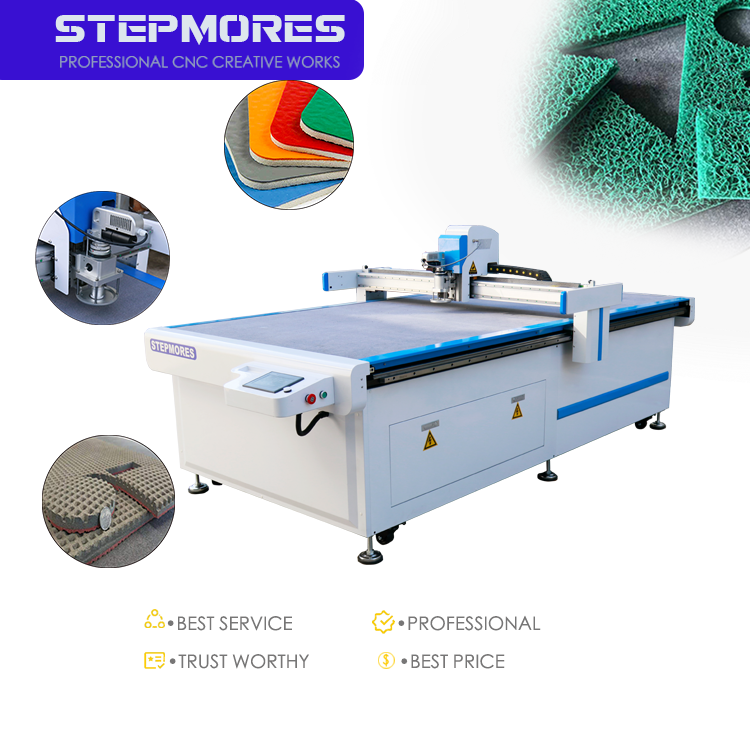
Understanding CNC Wood Router Capabilities and Applications
A CNC wood router automates cutting, carving, and shaping wood with computer-controlled precision—enabling complex 2D and 3D designs far beyond manual capability. It processes hardwoods, softwoods, plywood, MDF, and select plastics. Core functions include milling, relief carving, drilling, contour cutting, and variable-depth engraving for textured 3D surfaces; advanced models with rotary axes can even turn cylindrical stock for spindles and columns.
Applications span furniture manufacturing, custom cabinetry, signage, musical instrument components, and architectural millwork. Workshops gain consistent repeatability, reduced labor costs (one operator can manage multiple machines), and up to 30% less material waste through optimized toolpath nesting. Enclosed cutting zones enhance safety by limiting direct contact with rotating bits, while digital templates eliminate costly rework by ensuring every part meets exact specifications. Stored design files accelerate repeat orders, and CAD/CAM integration shortens the path from concept to prototype to hours—not days. This versatility makes CNC routers equally effective for artisanal one-offs and high-volume production, delivering rapid ROI across shop sizes and educational environments.
Key Technical Specifications That Impact Performance
Selecting a CNC wood router demands careful attention to technical specifications: the right balance of power, precision, and structural integrity directly determines cut quality, cycle times, and material versatility.
Spindle Power, Speed Range, and Tool Compatibility
Spindle power—typically 3 kW to 12 kW—dictates performance on dense materials. Units with at least 5.5 kW achieve 35% faster cycle times on 25 mm oak compared to 3 kW models (2023 industry benchmark). Equally important is spindle speed range (commonly 6,000–24,000 RPM), which must align with tooling requirements. ER collet systems (e.g., ER20 or ER32) support broad tool compatibility—from fine engraving bits to large panel-raising cutters. Always confirm that the spindle’s taper and collet type match your intended tool shanks.
Working Area, Axis Configuration, and Rigidity
Bed size—such as 1200×1200 mm or 2500×1300 mm—should comfortably accommodate standard sheet goods to minimize manual repositioning. A 2022 manufacturing study found that increasing bed size by 30% cuts part-flipping frequency by 60%, significantly boosting throughput. Standard 3-axis machines excel at 2D profiling and pocketing; 4- or 5-axis configurations enable true 3D carving without custom jigs. Structural rigidity is foundational: heavy steel frames resist deflection under load far better than aluminum extrusions, maintaining positional accuracy within ±0.05 mm over extended runs—and dampening vibration to extend tool life.
Matching CNC Wood Router Types to Business Needs
Choosing the right CNC wood router hinges on matching machine capabilities to your operational scale, part complexity, material mix, and daily output—not just budget.
Entry-Level Routers for Small Shops and Prototyping
Compact, entry-level CNC routers—with work areas under 4×4 feet—are ideal for small shops, makerspaces, and prototyping. They efficiently handle signage, decorative panels, and one-off furniture components using 1–3 hp spindles, stepper motors, and belt-driven motion systems. Setup requires minimal floor space and is often completed in under a day. Most integrate seamlessly with mainstream CAD/CAM software, reducing training time. Despite their affordability, these units deliver cutting tolerances of ±0.005 inches—sufficient for precise joinery and detailed carving. According to the Freedonia Group (2022), many operators recoup their investment within 12–18 months.
Industrial CNC Wood Routers for High-Volume Production
Industrial CNC routers are engineered for continuous operation: heavy-duty steel frames, automatic tool changers (ATCs), high-power spindles (5 hp+), and full-sheet vacuum hold-down tables (4×8 ft or larger). Advanced motion control and 5-axis capability allow complex geometries without manual intervention. Liquid-cooled spindles ensure thermal stability during long shifts, while optimized nesting reduces material waste by up to 40% in cabinet and furniture production (IndustryWeek, 2022). These systems require skilled operators and robust infrastructure—but deliver lower per-part costs and higher uptime when deployed correctly.
Software, Support, and Long-Term Value Considerations
A CNC wood router’s long-term value depends as much on its software ecosystem and support infrastructure as on mechanical performance. Over a five-year lifecycle, maintenance, training, and downtime mitigation can account for up to 30% of total cost of ownership—making these “soft” factors essential to ROI forecasting.
CAD/CAM Integration and Ease of Use
Productivity hinges on seamless CAD/CAM integration. Machines that import common file formats natively—without third-party conversion—reduce programming time and material waste, especially for intricate 3D carving. Evaluate post-processor compatibility with your existing design workflow to avoid bottlenecks. An intuitive interface isn’t optional: steep learning curves slow adoption and increase error rates, directly impacting shop throughput.
Warranty, Training, and Local Service Availability
A comprehensive warranty reflects confidence in build quality—look for coverage that extends beyond base terms to critical components like spindles and linear guides, backed by responsive escalation paths. Structured training—whether on-site or virtual—accelerates operator proficiency and minimizes early-stage mistakes. Most critically, verify local service availability through the distributor: rapid on-site response prevents costly production stoppages. Together, strong warranty terms, accessible training, and nearby technical support transform a capital investment into a sustained competitive advantage.
Frequently Asked Questions (FAQ)
What materials can a CNC wood router process?
CNC wood routers can process hardwoods, softwoods, plywood, MDF, and select plastics, making them suitable for a variety of applications like furniture, cabinetry, and signage.
What are the advantages of using a CNC wood router?
Using a CNC wood router improves precision, reduces material waste, increases consistency, and lowers labor costs. It also speeds up production and is versatile for both one-off projects and high-volume production.
How do I choose the right CNC wood router for my business?
Select a router based on operational scale, part complexity, daily output, budget, and material mix. Consider technical specifications like spindle power, speed, working area, and rigidity.
Why is CAD/CAM integration important for CNC wood routers?
CAD/CAM integration ensures efficient workflow, reduces programming time, minimizes material waste, and supports intricate 3D designs by eliminating file conversion bottlenecks.
What factors contribute to the long-term value of a CNC wood router?
Key factors include seamless software integration, reliable local service and technical support, comprehensive warranties, and operator training to reduce downtime and extend machine life.