
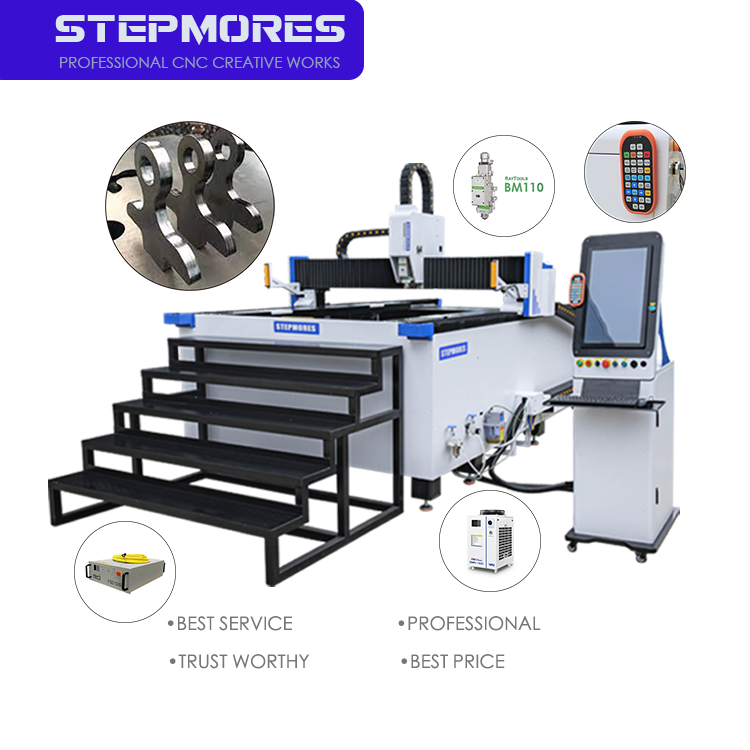
The Evolution of Industrial Metal Fabrication: Harnessing Fiber Laser Precision
Metal fabrication stands at a technological crossroads. For decades, the industry relied heavily on plasma and waterjet systems, each carrying inherent limitations regarding edge quality and thermal impact. The emergence of fiber laser technology has fundamentally redefined these benchmarks, offering a leap in capability that is comparable to the precision transition seen in high-end woodworking when shops moved to advanced CNC wood router setups. For production managers and fabrication shop owners, fiber laser technology represents a transition toward advanced manufacturing standards.
The Physics of High-Performance Beam Delivery
At the heart of the fiber laser advantage is the beam quality. Unlike legacy systems that rely on complex mirror alignments and gas mixtures, fiber lasers generate light through a gain medium, delivering a highly concentrated beam directly through a fiber optic cable. This mechanism provides an incredibly small focal spot, which allows for cleaner cuts with minimal kerf width. During extensive evaluations of fabrication workflows, it becomes clear that this beam intensity provides a distinct advantage when processing thin-to-medium gauge metals. The reduction in the Heat Affected Zone (HAZ) is paramount; because the laser processes material with such surgical precision, the surrounding metal experiences significantly less thermal stress. This results in minimal distortion, which translates into fewer hours required for post-processing such as straightening, grinding, or deburring.
Operational Stability and Solid-State Reliability
A significant challenge in traditional fabrication is the constant need for recalibration. Mirrors get misaligned, gases leak, and mechanical drives wear down. Fiber laser machines operate on a solid-state architecture, meaning there are no internal moving optics to drift out of alignment. This inherent stability leads to a predictable increase in operational availability. In a sophisticated manufacturing environment, the reliability of the light source is a force multiplier. Furthermore, the electrical efficiency of fiber lasers—often reaching electro-optical conversion rates exceeding 30%—means that shop owners see a tangible difference in their electricity consumption compared to legacy cutting systems. When combining this electrical efficiency with the elimination of complex gas supply chains, the operational cost per part reaches a more manageable level, providing a clearer path to sustainable resource management.
Versatility and the Reflective Material Challenge
One of the most persistent hurdles in metal fabrication is the processing of highly reflective materials such as aluminum, copper, and brass. Conventional systems often struggle here, as the laser energy is reflected back into the source, risking damage to the equipment. Fiber lasers handle these alloys with stability. The shorter wavelength of the fiber beam is absorbed more readily by reflective surfaces, allowing for high-quality cutting even in materials that once required specialized setups. This versatility transforms the production floor. Instead of needing to swap out machinery or change production lines to accommodate different metal types, a shop equipped with fiber laser technology can pivot from stainless steel to brass with minimal adjustments. This agility is the difference between a shop that wins complex contracts and one that faces technical limitations.
Optimizing Material Utilization
The value of advanced motion control lies in the marriage of velocity and precision. Modern CNC systems allow for rapid acceleration and deceleration, meaning the machine can navigate complex nesting patterns without losing accuracy. For companies handling batch production, the ability to nest parts tightly on a single sheet of metal—minimizing scrap and maximizing raw material utilization—is where the real industrial value is found. Every square inch of metal saved is a direct improvement in margin. When this level of material efficiency is coupled with the stability of the laser head, the total output capacity of a shop can climb by a measurable percentage compared to mechanical cutting methods.
Engineering Excellence through Strategic Partnerships
In the modern manufacturing landscape, the equipment chosen is only as effective as the engineering support behind it. Fabrication shops that excel are those that treat their tool selection as a strategic partnership. High-precision manufacturing requires a depth of technical knowledge that spans from software integration to the physical assembly of the machine. Stepmores stands at the intersection of this expertise, providing the industrial-grade manufacturing capacity and supply chain reliability that modern producers demand. By focusing on rigorous quality control and high-standard engineering, Stepmores ensures that every unit meets the specific, demanding needs of an international market. Choosing a partner that values technical transparency and industrial-scale capability is the most reliable way to ensure that a fabrication workflow remains both stable and commercially sustainable in a rapidly evolving global market.
Table of Contents
- The Evolution of Industrial Metal Fabrication: Harnessing Fiber Laser Precision
- The Physics of High-Performance Beam Delivery
- Operational Stability and Solid-State Reliability
- Versatility and the Reflective Material Challenge
- Optimizing Material Utilization
- Engineering Excellence through Strategic Partnerships