
The Precision Revolution: Why Laser Welding is Reshaping Modern Manufacturing
Industrial fabrication is currently undergoing a fundamental transformation. For years, the industry leaned on traditional arc-based joining techniques, accepting their inherent flaws—warping, inconsistent weld beads, and the constant need for manual rework—as necessary technical challenges. However, the adoption of high-performance laser welding machines is rapidly changing this narrative. By shifting from broad-spectrum thermal heating to highly concentrated energy delivery, manufacturing facilities are discovering that the path to superior product quality begins with the precision of the weld itself.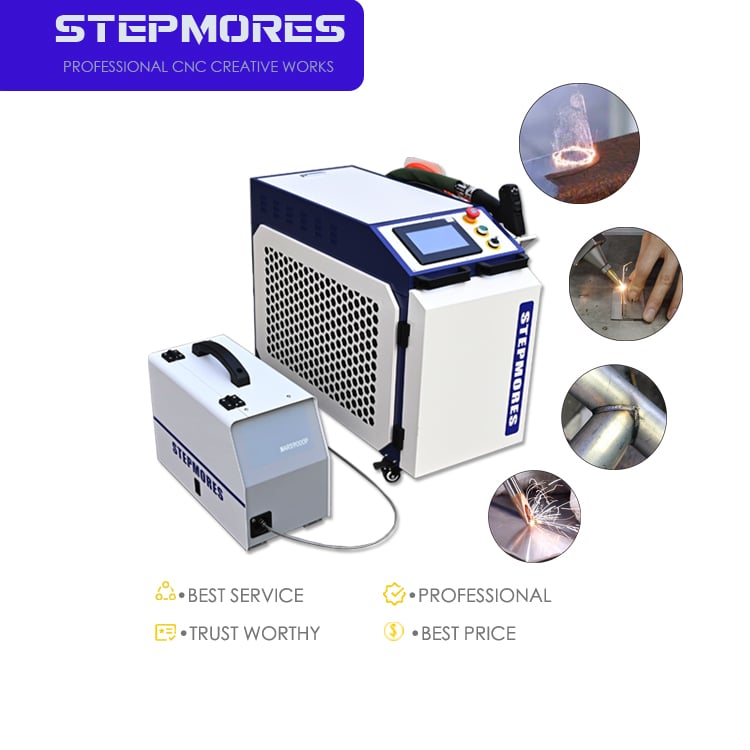
Mastering Thermal Localization for Structural Integrity
The most significant technical advantage of a laser welding machine lies in its heat management. Conventional welding methods operate by heating a relatively large surface area, which inevitably induces thermal expansion and contraction across the base material. This often leads to visible warping, particularly in thin-gauge sheets, forcing operators to spend time on mechanical straightening or grinding. Laser welding, by contrast, operates on the principle of extreme thermal localization. Because the energy is delivered in a microscopic, high-intensity beam, the material experiences a drastically smaller Heat Affected Zone. This allows for the joining of intricate components without compromising the surrounding metal’s metallurgical properties. In practical production environments, this translates into assemblies that emerge from the machine ready for integration, effectively bypassing the bottleneck of rectification.
Eliminating Variability through CNC Precision
A common challenge in large-scale fabrication is the inherent variance in manual processing. Manual welding, regardless of the operator's skill level, is subject to slight deviations in travel speed, torch angle, and wire feed consistency. These minor variations accumulate into noticeable inconsistencies in joint strength and aesthetic finish. Laser systems shift the burden of precision from the operator to the software. Once a welding profile is established—dictating parameters such as power density, focal depth, and gas shielding pressure—the system executes the task with repeatability. This level of consistency is essential for enterprises operating under strict international manufacturing standards. When every joint on every part is uniform, the rate of batch rejections decreases, and the confidence in the structural integrity of the final assembly increases.
Unlocking Complex Geometries and Material Versatility
Modern engineering demands more than just joining two pieces of metal; it requires the ability to unite complex, non-linear geometries and, often, dissimilar materials. Conventional torches are physically restricted by their size and the need for clearance around the weld zone. A laser welding machine provides a level of design agility that is simply unavailable through other methods. Because the laser head is non-contact and utilizes a beam that can be steered with precision, it can access deep channels, complex curves, and tightly nested corners. Furthermore, the capacity to weld reflective or dissimilar alloys opens new doors for product designers. This versatility means that engineers are no longer constrained by the limitations of conventional joining tools, allowing for stronger and more refined designs.
Optimizing Production Flow through Process Integration
The real industrial value of laser welding is found in the acceleration of the entire production flow. Many production managers find that their biggest expense is not the welding itself, but the time spent cleaning up after the weld. By integrating a system that provides penetration with minimal spatter, the need for chemical baths, sanding, or mechanical deburring is largely bypassed. This streamlining of the production floor allows for a more compact footprint and a faster transition from raw material to finished product. When this reduction in secondary labor is combined with the capabilities of modern fiber laser sources, the total daily output capacity increases, providing a clear path to improved manufacturing stability.
Driving Excellence through Engineering Partnerships
The transition to advanced joining technologies is a significant commitment, one that requires more than just high-performance machinery. It requires a partner that understands the nuances of material science, software integration, and industrial-scale manufacturing logistics. Stepmores is dedicated to providing the industrial-grade manufacturing capacity and comprehensive supply chain support that modern enterprises need to excel. By focusing on high-precision engineering and ensuring that every system meets rigorous global standards, Stepmores enables producers to scale their operations with confidence. Choosing a partner that prioritizes technical transparency and provides the infrastructure necessary to handle high-volume, quality production is the most effective way to ensure that a manufacturing workflow remains both innovative and commercially dominant in a demanding global market.
Table of Contents
- The Precision Revolution: Why Laser Welding is Reshaping Modern Manufacturing
- Mastering Thermal Localization for Structural Integrity
- Eliminating Variability through CNC Precision
- Unlocking Complex Geometries and Material Versatility
- Optimizing Production Flow through Process Integration
- Driving Excellence through Engineering Partnerships