
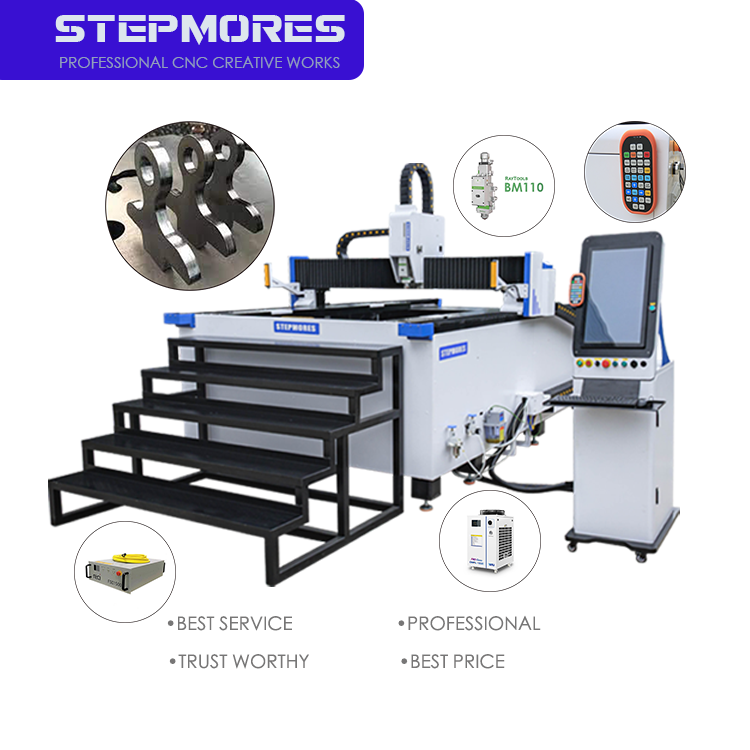
Unmatched Precision and Speed for High-Fidelity Ad Fabrication
A CNC cutting machine brings high-fidelity automation to advertising production—reducing manual variance while accelerating cut cycles across vinyl, acrylic, corrugated board, and other common display materials.
Sub-millimeter accuracy ensures perfect graphic registration on vinyl, acrylic, and corrugated board
Modern CNC cutting machines achieve positioning repeatability within ±0.05 mm on rigid and flexible advertising media (industry technical benchmark, 2023). On vinyl, vacuum hold-down and controlled drag-knife pressure prevent film lifting during contour cuts. On acrylic, polished flute geometry and adaptive spindle speeds minimize chipping along fine letter edges. On corrugated board, light-pressure creasing preserves flute integrity while producing crisp, functional fold lines. This sub-millimeter control enables precise alignment with printed registration marks—eliminating visible white gaps or overlaps in multi-layer graphics. Fine text, serif fonts, and small icons remain sharp at close viewing distances. Because the machine follows vector data—not a hand-held guide—every part matches the digital proof. Multi-panel wall graphics align cleanly across seams, and die-cut window decals retain exact contours. As a result, fabricators move from print to finished part without hand trimming, reducing setup delays and repeat orders.
Automated CNC cutting eliminates fatigue-induced errors—delivering consistent output at scale
Manual cutting quality degrades as operators tire—especially during long runs of acrylic letters, foam-board displays, or vinyl decals. A CNC cutting machine removes human variability entirely. Once the job file is approved, the system repeats the identical toolpath with consistent speed, depth, and dwell time. Automated tool changes and pre-configured material libraries further reduce operator decision points. In a 2023 comparative production study, automated CNC lines reduced manual rework by 27% and increased usable output per shift by 19%. Edge finish remains uniform from the first to the final unit—even across hundreds of parts. Barcode or QR job loading can auto-select the correct file and material settings. This consistency supports brand-standard sign programs and multi-location campaigns, while freeing operators for parallel tasks like weeding, masking, and assembly. Because every cut traces back to an approved CAD file, throughput becomes predictable, rejected parts decline, and delivery windows improve.
Material Versatility: One CNC Cutting Machine, Multiple Advertising Substrates
A versatile CNC cutting machine is no longer limited to a single substrate class. Modern advertising workflows rely on one platform to handle everything from flexible vinyl and foam board to corrugated cardboard, acrylic, and rigid composites—without replacing hardware or adding dedicated stations. This flexibility reduces setup time and enables print shops to quote a broader range of display and signage projects.
Seamlessly process vinyl, foam board, corrugated cardboard, acrylic, and composites without hardware swaps
Interchangeable knife blades, oscillating knives, and router spindles allow a single machine to adapt across material types. For vinyl and soft plastics, the oscillating knife delivers clean, tear-free cuts on adhesive-backed graphics. For foam board and corrugated cardboard, low-pressure tangential blades compress the substrate just enough to produce precise creases and cuts—without crushing flutes. Acrylic and rigid composites are routed with high-speed spindles and optimized chip loads, yielding smooth edges that require little to no secondary finishing. This multi-material capability eliminates the need to shuttle jobs between separate systems—preserving graphic registration and reducing labor. Operators can switch from a roll-fed vinyl job to a rigid acrylic panel in minutes using quick-change tool holders and stored toolpath libraries. Advertising shops thus consolidate production steps and maintain multiple material streams through a single, unified workflow.
Intelligent toolpath adaptation maintains clean edges and substrate integrity across material types
Modern control software automatically adjusts spindle speed, feed rate, cutting depth, and tool pressure based on the selected substrate. When cutting acrylic, the system lowers RPM or engages air cooling to prevent heat buildup and edge melting. For corrugated cardboard, it selects shallower passes and lower pressure to avoid crushing flutes or fraying surfaces. On foam board, multi-pass compression cuts preserve the foam core while cleanly slicing through top and bottom liners. For composites and layered boards, chip load calculations prevent delamination and tear-out. These adaptive strategies run without manual trial-and-error—maintaining substrate integrity across both rigid and flexible materials. Edge quality stays consistent across full production runs, reducing scrap and rework. And because toolpath adaptations are saved and recalled per material profile, even less experienced operators can achieve professional-grade results across the full spectrum of advertising substrates.
Smart Waste Reduction and Cost Optimization with CNC Cutting Machine Nesting
Advanced nesting algorithms reduce material waste by up to 22% (FESPA 2023 benchmark)
Inefficient sheet layouts and manual part placement erode margins in advertising production. CNC cutting machines equipped with advanced nesting software automatically arrange irregular graphic components to maximize material usage across vinyl, foam board, acrylic, and corrugated board. Per the FESPA 2023 benchmark, this intelligent layout approach reduces material waste by up to 22%. Unlike manual layouts—where unused gaps and partial sheets accumulate—nested patterns maximize usable area on every sheet. The software also shortens non-productive tool travel, lowering energy use and cutting time in parallel. Remnant offcuts become more reusable, reducing raw material purchases and storage demands. Over a month of high-volume display work, these efficiencies compound into meaningful cost reduction—without compromising edge quality. Per-unit production costs fall consistently across repeated runs, and automated nesting removes guesswork from multi-job scheduling—helping teams fit more orders onto the same substrate stock and improve overall profitability.
Accelerated Turnaround: From Design to Finished POP Display in Under 90 Minutes
A CNC cutting machine transforms a static design file into a physical point-of-purchase display—bypassing the manual bottlenecks of knife cutting, scoring, or drilling. Because toolpaths generate directly from vector artwork, the machine executes kiss-cutting, creasing, and routing in a single automated sequence. For a typical single-sheet foam board or corrugated sign blank, cutting, scoring, and perforating can be completed in well under 90 minutes once the file is approved—and that speed is fully repeatable. Print shops can therefore schedule same-day or next-morning delivery without overtime.
The time savings stem from two key advantages: First, digital setup replaces physical templates—cutting job changeover from over an hour of manual alignment to just a few minutes of file loading. Second, automated toolpath control eliminates pauses between operations; the machine selects the optimal tool, pressure, and speed for each task on the fly. As a result, short-run POP displays move from approved artwork to finished component in under 90 minutes—while long runs gain even more from unattended operation and minimal human intervention. This compressed timeline makes rapid concept testing and last-minute campaign kit production not only feasible—but reliable.
FAQs
What types of materials can a CNC cutting machine handle?
Modern CNC cutting machines can process a wide range of advertising materials including vinyl, acrylic, foam board, corrugated cardboard, and rigid composites without requiring hardware swaps.
How accurate are CNC cutting machines?
CNC cutting machines achieve sub-millimeter accuracy, with positioning repeatability within ±0.05 mm across different media, ensuring precise graphic alignment and exceptional quality.
How does CNC cutting improve production consistency?
CNC cutting eliminates human error and fatigue by automating repetitive processes, ensuring consistent speed, depth, and precision for every part through preconfigured toolpaths and material libraries.
How much material waste can be reduced with CNC nesting software?
Advanced nesting algorithms can reduce material waste by up to 22% by optimizing sheet layouts and minimizing unused spaces during the cutting process.
How quickly can a CNC cutting machine produce a point-of-purchase display?
CNC cutting machines can transform a design file into a finished POP display in under 90 minutes, making them ideal for rapid production needs.
Table of Contents
- Unmatched Precision and Speed for High-Fidelity Ad Fabrication
- Material Versatility: One CNC Cutting Machine, Multiple Advertising Substrates
- Smart Waste Reduction and Cost Optimization with CNC Cutting Machine Nesting
- Accelerated Turnaround: From Design to Finished POP Display in Under 90 Minutes
- FAQs