
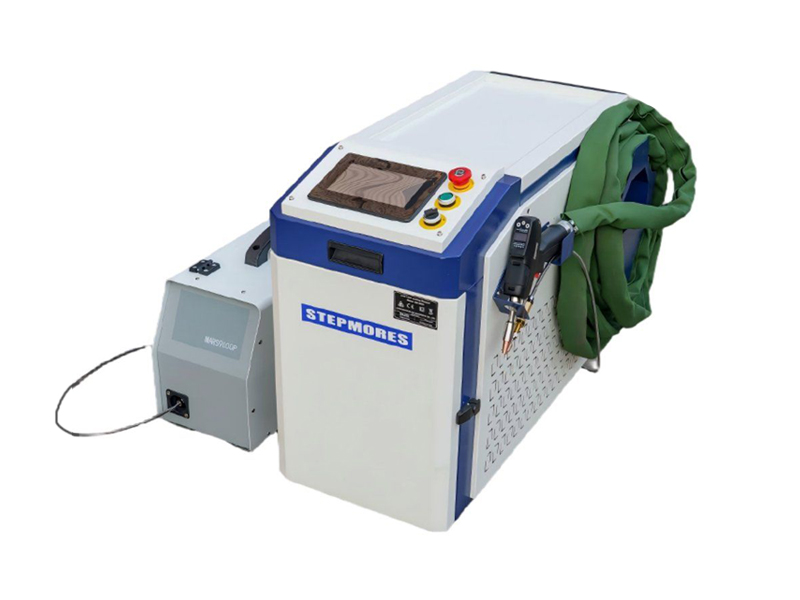
Unmatched Precision and Minimal Thermal Impact
Micron-Level Control and Tight Tolerances in Laser Welding Machine Applications
Laser welding offers incredible precision at the micron level, usually around plus or minus 0.05 mm, which makes possible some really complicated shapes that just aren't feasible with traditional welding techniques. The importance of this kind of accuracy becomes clear when looking at industries like aerospace and medical devices, where even small errors beyond 0.1 mm can lead to serious problems down the line. Compared to arc welding methods, laser technology produces consistently good results whether working with super thin materials as delicate as 0.1 mm foil or thicker parts going up to 15 mm in thickness. Factory floor reports indicate manufacturers need to make about 40 percent fewer adjustments after welding because they get much better control over how deep the weld penetrates. Since lasers don't actually touch what they're working on, there's no wear and tear on tools that might affect consistency. This means tighter tolerances stay consistent throughout lengthy production cycles, and companies save money by avoiding the expensive rework needed to fix warping issues common with other welding approaches.
Dramatically Reduced Heat-Affected Zone (HAZ) and Distortion vs Arc/TIG/MIG
When using laser welding techniques, the Heat Affected Zone (HAZ) stays remarkably small at around 0.5 to 1.5 millimeters for steel materials. That's actually about 60 to 85 percent smaller than what we see with traditional methods like TIG or MIG welding where the HAZ can stretch beyond 5 mm. Because this area affected by heat is so narrow, there's much less chance of those unwanted grain growth patterns and phase changes that weaken the material and reduce its ability to resist corrosion, particularly important when working with high performance alloys. For sheet metal jobs specifically, the amount of angular distortion decreases dramatically too. Tests show that when welding 2 mm thick stainless steel sheets, the angle deviation remains below half a degree, whereas conventional MIG welding typically results in between 3 and 5 degrees of warping according to industry reports from PWI in 2023. Another big advantage comes from the fact that these lasers generate such concentrated heat. This makes it possible to perform welds right next to sensitive parts like seals, various types of sensors, or electronic components without worrying about overheating and damaging anything nearby during the process.
Faster Throughput and Higher Production Efficiency
Weld Speed Advantages of a Laser Welding Machine Across Material Thicknesses
Laser welding machines can run anywhere from three to ten times faster than regular arc welding methods no matter what thickness materials we're talking about. For thin metal sheets under one millimeter thick, these lasers can actually weld at speeds reaching ten meters per minute with incredible precision. When dealing with thicker materials up to twelve millimeters, they still manage to complete the job in just one pass at around two meters per minute speed. This eliminates those multiple passes needed when using TIG or MIG welding techniques. The reason behind this impressive speed? These machines generate energy densities over one megawatt per square centimeter, which allows for fast, deep penetration without needing any preheating first. Take automotive battery tray production as a case study. Factories that switched to laser systems have seen their cycle times drop by anywhere between forty to sixty percent. Another big advantage comes from the fact that laser welding doesn't require physical contact with the workpiece. So the welding speed stays pretty much constant even when working on complicated shapes and contours. Traditional manual or semi-automated arc welding approaches just can't match this consistency, especially when navigating through curved sections where operators naturally slow down.
Balancing Speed, Strength, and Surface Quality Without Compromise
Speed doesn't mean sacrificing quality when it comes to laser welding. These welds can reach depth-to-width ratios of around 10:1, creating those deep narrow seams we all want. The tensile strength actually matches what's in the base material itself, something confirmed through various metallurgical tests which typically show joint efficiencies between 95% and 102%. When talking about surface finish, most laser welds stay under that 0.8 micrometer Ra threshold without needing any additional polishing work. That happens because the laser basically burns away surface impurities instead of mixing them into the weld pool. No more dealing with annoying spatter issues that require extra cleanup after welding, plus the final product keeps its nice appearance for parts that customers will see directly. And here's another benefit worth mentioning: the heat affected zone remains below 0.3 mm, so there's no risk of grain coarsening from excessive heat exposure. For companies working in aerospace manufacturing, this means their products pass those tough x-ray inspections much quicker compared to traditional TIG welding methods, often completing production runs at about five times the speed.
Seamless Automation and Smart Factory Integration
Native Compatibility with CNC Systems, Robotics, and Industry 4.0 Workflows
Modern laser welding machines fit right into today's manufacturing setups thanks to their built-in digital connections that work out of the box without needing special software translators or extra coding layers. The controllers in these machines talk smoothly with CNC machines and robots too, keeping those super precise positions down to the micron level while saving time that would otherwise go into manual programming tasks. Information moves back and forth in real time between design software, welding controls, and quality check sensors throughout the production line. This creates what engineers call a closed loop system where settings adjust themselves automatically based on what's happening on the factory floor. When companies upgrade to these new systems as part of their Industry 4.0 plans, they typically save around 40% on installation costs compared to trying to make old welding equipment compatible with newer tech. Plus, there's almost no delay when different parts of the equipment need to communicate with each other during operation. Sensors placed earlier in the process detect things like how thick the material is or its surface condition, which then tells the welding parameters to change on the fly. This smart responsiveness cuts down unexpected stoppages and means fewer workers need to step in and fix problems manually.
Lower Total Cost of Ownership Through Reduced Post-Processing
Near-Net-Shape Welds: Minimal Spatter, Superior Finish, and Zero Re-Work
Laser welding creates welds that are almost ready for final assembly right out of the machine, with hardly any spatter at all. This means no need for all the extra work that comes with arc, TIG, or MIG methods like grinding down excess material, removing fillers, or fixing distortions. The surface finish typically stays under 0.5 microns Ra, which meets most factory requirements straight away without needing additional polishing or machining. Many shops report cutting their post-weld cleanup time by around half when switching to laser tech. Parts also cost much less to run because there's no wearing out expensive consumables like electrodes or gas cylinders. Since lasers put in so much less heat compared to traditional methods, components stay true to their original shape, saving money on warped parts that would otherwise end up in the scrap bin. All these factors combined mean companies spend less overall while getting products made faster, making laser welding more than just another way to join metal but actually a smart move for boosting shop productivity.
FAQ
What industries benefit the most from laser welding? Laser welding is particularly beneficial for industries that demand high precision and quality, such as aerospace, medical devices, electronics, and automotive manufacturing.
How does laser welding reduce the heat-affected zone? Laser welding significantly reduces the heat-affected zone by concentrating heat in a very narrow area, minimizing grain growth patterns and phase changes that can compromise material integrity.
Can laser welding be integrated into existing manufacturing systems? Yes, modern laser welding machines are compatible with CNC systems and robotics, making them a good fit for Industry 4.0 manufacturing systems without requiring additional software or coding layers.