
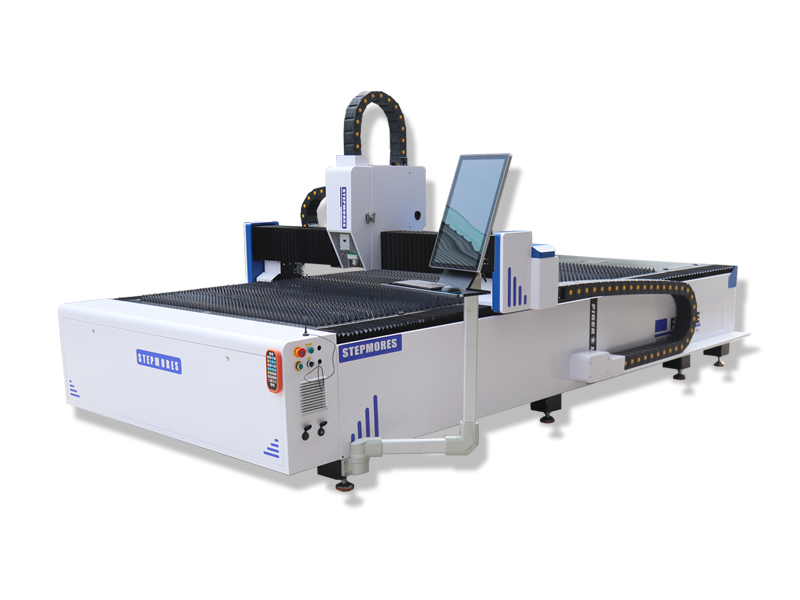
Lower Energy Consumption and Operating Costs
CNC fiber laser cutting machines deliver substantial energy savings compared to CO2 laser systems—thanks to their solid-state design and superior electrical-to-optical conversion efficiency.
Fiber laser efficiency vs. CO2 lasers: 3–5× less power per cut
When it comes to power consumption, fiber lasers use about three to five times less electricity for each cut compared to traditional CO2 lasers. Why? Because they're built with a direct diode-pumped fiber design that cuts down on those pesky energy losses found in CO2 systems. Think about all the wasted energy from exciting gases and losing power through mirrors and lenses in older setups. Modern fiber lasers actually turn around 40% of their electrical input into real cutting power while CO2 models struggle to hit just 10 to 15%. For shops doing lots of metal work, especially with materials like stainless steel, aluminum, and various non-ferrous metals, these differences really add up. The biggest gains come when working with thinner sheets (anything under 6mm thick), since the way the laser beam gets delivered is so efficient it boosts production rates without overheating the material too much.
Real-world ROI: Reduced electricity, cooling, and auxiliary system costs
The savings really start adding up when we look at overall operational costs. Power bills tend to drop somewhere between 30% and 50%, and chillers just aren't working as hard anymore either, cutting their usage by about 70% because these systems generate so much less heat. For facilities that need strict temperature control, these savings multiply even more. When it comes to fiber lasers, there are several hidden cost advantages too. No more buying expensive laser gases, nobody has to spend time aligning mirrors, and there's basically nothing else to replace or maintain. The machines themselves are simpler constructions with far fewer components that can break down. According to what many manufacturers have seen in practice, most companies see their return on investment within 18 to 24 months after switching over. Production supervisors consistently report around a 25% cut in running costs once they make the transition from older technology.
Reduced Maintenance and Labor Requirements
The solid-state architecture of CNC fiber laser cutting machines eliminates entire categories of failure-prone components found in CO2 systems—delivering greater reliability, longer uptime, and lower labor dependency.
Solid-state design eliminates mirrors, gases, and alignments
CO2 lasers work differently from fiber lasers. Traditional models depend on complex mirror setups, special gas blends like CO2 mixed with nitrogen and helium, plus regular adjustments to keep everything aligned properly. Fiber lasers take a different approach altogether. They create and transmit the laser beam inside a sealed fiber optic cable that's actually quite flexible. There's none of the hassle with mirror cleaning or replacements, no need for refilling gas tanks or adjusting pressures, and absolutely no requirement to realign the beam path over time. Industry data shows these fiber laser systems cut down on both planned and unexpected maintenance needs by somewhere between 40% and 60%. That means significant savings when looking at parts and labor expenses that would otherwise pile up month after month for conventional laser systems.
Extended uptime and lower technician labor hours per production shift
Fiber lasers need far less servicing and have no consumables to track, which means they stay online around 92 to 97 percent of the time. That's quite a jump from the roughly 80 to 85 percent uptime seen with similar CO2 systems in metal fabrication shops. The difference matters a lot because it reduces the amount of work technicians have to do during each shift by about 30%. When breakdowns happen less often and regular calibration isn't needed so frequently, everyone gets a break. For production crews, this translates to steady output without those annoying interruptions for maintenance. Labor efficiency just keeps going up throughout day and night operations when these lasers are part of the setup.
Higher Throughput, Precision, and Material Yield
Modern CNC fiber laser systems combine speed, accuracy, and intelligent nesting to boost output, tighten tolerances, and dramatically improve raw material utilization.
2–3× faster cutting speeds on 1–6 mm mild steel and stainless
Fiber lasers can cut through thin to midrange metals (around 1 to 6 mm thick) at speeds that are roughly double to triple what traditional CO2 or plasma systems manage. The reason? These lasers deliver concentrated power (sometimes reaching 6 kW), move their axes really fast (over 3 Gs of acceleration), and generate much less heat buildup during operation. Take stainless steel that's 3 mm thick for instance it typically takes about 15 seconds to cut with a fiber laser, while plasma systems might need closer to 45 seconds for the same job. Manufacturers who switch to this technology often find they can complete production runs about 40% quicker without needing extra staff hours or investing in new machinery.
Nesting optimization and kerf reduction saving 5–12% raw material annually
When manufacturers combine precision beam control that creates kerf widths down to about 0.1 mm with smart AI nesting software, they significantly cut down on space between parts and reduce wasted material. Most shops report recovering somewhere between 5% and 12% of their raw sheet metal every year. Take a mid sized operation that cuts through around 500 tons of steel yearly for example. At today's prices, these operations often save anywhere from $150k to almost $360k worth of materials just by optimizing their cutting process. Another benefit comes from the extremely narrow heat affected area, which measures less than half a millimeter. This means no need for extra grinding work after cutting, saving both time spent on manual labor and money spent on consumables like abrasives.
Reduced Post-Processing and Secondary Operation Costs
CNC fiber laser cutting delivers near-net-shape parts with exceptional edge quality—reducing or eliminating downstream operations that traditionally consume time, labor, and tooling.
Fiber lasers create very little dross and hardly any heat distortion while keeping parts within tight dimensional specs most of the time right from the start. The kerf width stays around 0.1 to 0.3 mm with clean edges free of oxides, so post processing like grinding or deburring often isn't needed anymore. Traditional shops spend roughly 15 to 25 percent of their budget on these extra steps. Switching to fiber lasers can cut down labor time by nearly half compared to older methods like plasma cutting or water jets. When parts don't need so much handling, there's less chance for them to warp or get damaged during processing. That means fewer hours spent fixing problems later on something that might cost upwards of $120 an hour when technicians have to step in. Better precision across the board speeds things up during assembly too, saving manufacturers between 18 and 30 cents per part when running large batches.
FAQ
How do fiber laser cutting machines achieve lower energy consumption?
Fiber laser cutting machines achieve lower energy consumption due to their solid-state design, which results in higher electrical-to-optical conversion efficiency compared to CO2 systems.
What are the maintenance benefits of using fiber laser systems?
Fiber laser systems eliminate the need for components like mirrors and gases, which reduces maintenance needs by 40% to 60%, leading to significant savings in parts and labor.
How do fiber laser cutters impact material yield and production speeds?
Fiber laser cutters offer faster cutting speeds and improved material yield through precision beam control and intelligent nesting, allowing for potential annual raw material savings of 5% to 12%.
Why do fiber lasers reduce post-processing and secondary operation costs?
Fiber lasers produce clean edges with minimal dross or heat distortion, often eliminating the need for grinding or deburring, thus reducing labor and tooling costs significantly.