
The Flexible Material Dilemma
A few years back, a packaging plant manager was at his wit's end. His team was cutting foam inserts by hand with utility knives. The material would flex, the blades would dull, and edges would come out ragged. One in every ten parts was scrapped due to poor cut quality, and the sheer manual labor was eating into his margins. He tried other methods, but router bits tore the foam and lasers melted it. Then he tested an oscillating knife. Within a week, the scrap rate dropped, productivity tripled, and the team was freed up for higher-value work. This is a story that repeats itself across countless workshops handling leather, textiles, or corrugated board. For materials that move, bend, or compress under pressure, the oscillating knife offers a solution that no other cutting technology can match.
A Technology Purpose-Built for Soft Materials
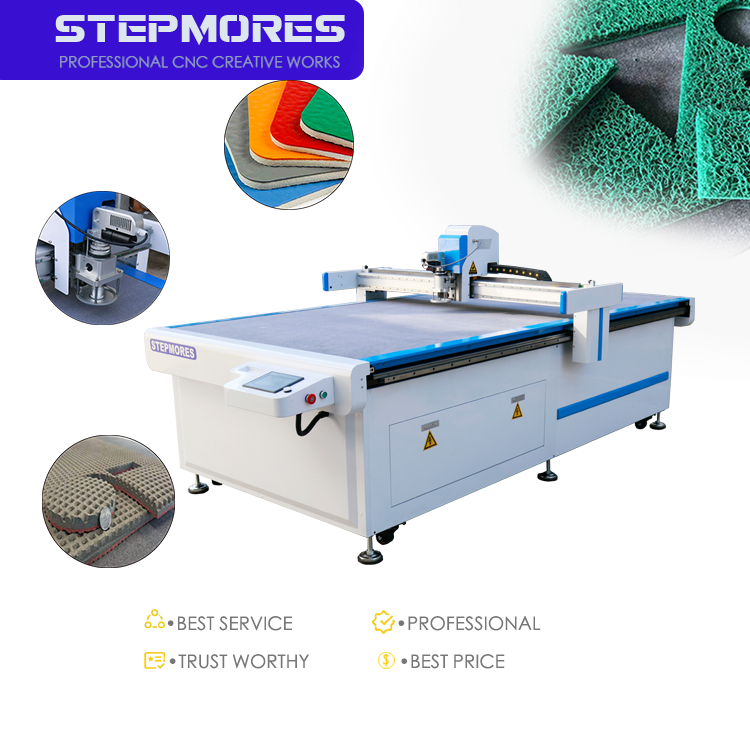
An oscillating knife is fundamentally different from a conventional router. Instead of spinning at high speed and forcing a path through the material, it moves up and down at a very high frequency—typically between 8,000 and 20,000 oscillations per minute . This vertical motion creates a precise sawing action that slices through materials cleanly. The blade does not push or pull; it shears. The cutting head can also rotate a full 360 degrees, allowing the tool to follow intricate curves and complex patterns without losing efficiency . The cut itself is completely cold, preserving the integrity of heat-sensitive materials like technical foams, PVC, and fine leathers . There is no discoloration, no melted edge, and no structural weakening.
Precision and Speed That Change the Math
For production managers, the value proposition comes down to numbers. The repeatability of these machines reaches 0.1 millimeters or better, producing consistent parts that fit perfectly every time . Cutting speeds can reach several meters per second, far outpacing manual methods . In one furniture factory, switching from hand cutting to an oscillating knife reduced the time to produce a set of upholstery panels from 45 minutes to just 6 minutes. The savings in labor alone paid for the machine within a year. The built-in nesting software further adds to the efficiency: by optimizing the layout of parts on the sheet, material utilization can jump by as much as 20% or more . For a plant consuming thousands of square meters of material per month, those savings are real money.
Versatility Across Materials and Applications
One of the most compelling arguments for the oscillating knife is its ability to handle a wide range of materials that would challenge or damage other technologies. It cuts foam, rubber, leather, felt, cork, cardboard, corrugated board, technical textiles, composites, PVC, multi-layer fabrics, and many other flexible materials. This versatility translates into a single machine serving multiple production lines. In the packaging industry, it is used for creating custom inserts and prototypes from foam and corrugated board. In the furniture sector, it handles upholstery, decorative elements, and even pattern making. In automotive and aerospace, it produces gaskets, insulating parts, and interior trim. The list grows as industries recognize the value of a cold-cutting tool that produces clean, fray-free edges without the thermal damage of laser or the mechanical stress of routers.
No Burning, No Fraying, No Secondary Finishing
The quality of the cut is a major differentiator. Laser cutting of materials like foam or acrylic can result in melted, discolored edges that require secondary cleaning or trimming. Mechanical methods like routers often create frayed edges on textiles or compression marks on foam. The oscillating knife produces a clean, smooth edge that often requires no post-processing . This not only saves time and labor but also eliminates the cost of specialized finishing equipment and the workspace it occupies. Parts move directly from the cutting table to the assembly or packing station. In the modern production line, this smooth workflow integration is a significant competitive advantage.
The Value of a Reliable Machine Partner
The efficiency and quality delivered by an oscillating knife depend on the reliability of the machine itself. A poorly built frame can flex, inaccurate rails can cause edge quality issues, and inadequate vacuum hold-down can allow materials to shift mid-cut. STMCNC, with over fifteen years of experience in CNC equipment manufacturing, builds its oscillating knife machines with a focus on stability and precision. The machines feature heavy-duty welded steel frames that resist deformation, high-precision linear guides and servo motors for accurate movement, and powerful vacuum tables that hold materials firmly in place . Multiple tool options—oscillating knives, round knives, V-cut tools, and marking pens—allow a single machine to handle a full range of cutting tasks without manual changeovers. With a global export footprint reaching more than sixty countries and a commitment to responsive technical support, STMCNC provides the manufacturing reliability that busy production facilities rely on. For a shop floor manager looking to cut flexible materials faster, cleaner, and with less waste, choosing a partner with proven engineering and service capabilities is as important as choosing the right technology.