
Match Material Compatibility to Your Leather Types and Thicknesses
Before selecting a CNC leather cutting machine, match the system to the exact leather types and thickness ranges in your production queue. Natural hides vary widely in density, finish, and thickness—so a single parameter set rarely delivers clean edges across full-grain, suede, bonded, and exotic materials.
Cutting Performance Across Full-Grain, Suede, Bonded, and Exotic Leathers
Full-grain leather retains its original grain and dense fiber network, cutting cleanly when power, focal length, and air assist are properly tuned. Natural variations—including scars, fat wrinkles, and hide marks—alter laser absorption, requiring localized adjustments rather than relying on presets. Suede’s napped, porous surface absorbs laser energy rapidly; excessive power or insufficient air assist increases charring risk. Bonded leather—composed of reconstituted fibers and polyurethane—cuts more uniformly and supports faster, repeatable processing, but its binder content can leave sticky residue on lenses and cutting beds. Exotic leathers like alligator, lizard, or ostrich feature irregular scale patterns and texture depth, demanding adjustable pulse frequency and dynamic focal control. Color and finish also influence absorption: dark, matte surfaces cut more efficiently than light, glossy ones. Before production, run test grids on each leather type to validate edge quality, cut-through speed, and kerf width—without this step, even high-precision systems may yield frayed edges, burn marks, or incomplete cuts.
How Leather Thickness and Surface Finish Affect Laser Absorption and Edge Quality
Leather thickness directly determines the energy density needed for a clean cut. Ultra-thin hides (0.4–0.8 mm) require low power and high speed to avoid curling or edge melting. Standard thin leather (0.8–1.2 mm) responds well to moderate settings, while thick sole or harness leather (2.5+ mm) often needs multi-pass strategies or higher wattage with precisely regulated air assist. Surface finish significantly affects absorption: smooth, pigmented, or coated leathers reflect more laser energy, reducing penetration and increasing undercut or roughness. Nubuck, suede, and oiled finishes absorb energy quickly—expanding the heat-affected zone and raising the risk of darkened or hardened edges. Dyes, waxes, and tanning agents further shift thermal response. Systems with adjustable pulse frequency, duty cycle, and air pressure provide essential flexibility. For consistent results, operators should test samples from the same hide batch and save validated parameter recipes. Because thickness can vary across a single hide, zoned power control or material mapping becomes critical for high-volume operations—preventing incomplete cuts in thicker zones and charring in thinner areas.
Evaluate CNC Leather Cutting Machine Performance for Your Production Needs
Precision, Speed, and Repeatability Benchmarks for Footwear, Upholstery, and Accessories
A reliable CNC leather cutting machine must balance precision, throughput, and repeatability across mixed-material batches. Footwear parts—especially uppers and soles—demand tight nesting and edge consistency; mid-range systems achieve ±0.1 mm accuracy on 3–8 mm cowhide, while high-end galvo platforms reach ±0.05 mm on thin lamb or kidskin (2023 industry benchmarks). For upholstery, where panel size outweighs intricacy, speed is prioritized: laser heads with 80–150 W CO₂ tubes typically cut 2–3 mm leather at 300–600 mm/s, maintaining kerf width under 0.2 mm (2024 production data). Accessories like wallets and watch straps demand extreme repeatability over thousands of small parts; stable gantry or hybrid motion systems maintain positioning deviation within ±0.02 mm after thermal compensation (2024 vendor test reports).
Always request sample cuts on your actual leather grades, not vendor-supplied stock. Hidden variability arises from hide tension, moisture content, and tanning method—a machine optimized for uniform vegetable-tanned leather may falter on soft chrome-tanned or oily pull-up leather. Key application benchmarks:
| Application | Typical Material Thickness | Precision Benchmark | Speed Benchmark |
|---|---|---|---|
| Footwear | 1.2–3.0 mm upper leather | ±0.1 mm | 300–500 mm/s |
| Upholstery | 1.0–2.5 mm panel leather | ±0.2 mm | 400–700 mm/s |
| Accessories | 0.6–2.0 mm fine leather | ±0.05–0.1 mm | 250–450 mm/s |
Prioritize field performance over spec sheets. A robust benchmark is whether the machine can cut 100 identical 5 mm chrome-tanned pieces with less than 0.15 mm cumulative edge deviation—heat-induced drift and debris accumulation are leading causes of hidden failure.
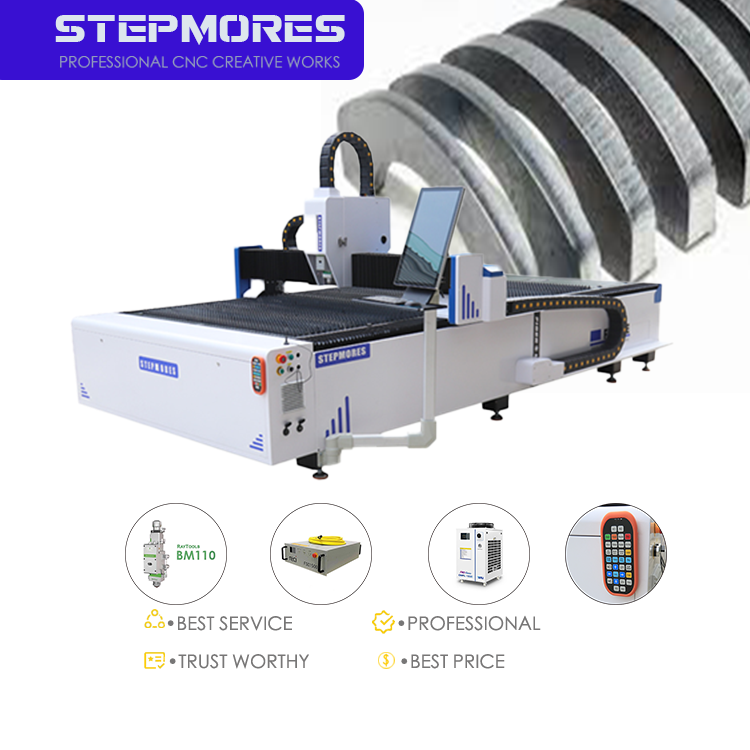
Why CO₂ Lasers Dominate Leather Cutting—Limitations of Fiber Lasers on Organic Materials
CO₂ lasers operating at 10.6 µm wavelength are strongly absorbed by leather’s water content and organic polymers, enabling clean thermal separation with minimal char when air assist and focal parameters are tuned (Materials Science, 2022). In contrast, fiber lasers at 1.06 µm are engineered for metals and tend to reflect off or pass through most natural leathers—causing uneven ablation, excessive burning, and inconsistent edge color. While some leather composites may respond to fiber lasers, the risks of toxic fume spikes and scorched edges remain significantly higher.
CO₂ laser tubes are also simpler to service and offer lower cost-per-watt for the 80–150 W range—the sweet spot for most leather applications up to 25 mm in multi-pass mode (2024 equipment data). Unless your workflow requires frequent metal-and-leather hybrid cutting on a single platform, a CO₂-based CNC leather cutting machine delivers superior safety, consistency, and long-term operational reliability.
Confirm Physical and Technical Integration Requirements
Before purchasing a CNC leather cutting machine, evaluate whether the bed size and control software align with existing material flow, nesting routines, and facility utilities.
Bed Size Impact on Batch Efficiency, Nesting Optimization, and Material Utilization
Larger cutting beds reduce sheet reloads and support denser nesting of hides or panels. For accessories, a 600 × 900 mm bed may suffice; footwear and upholstery production typically benefits from 1,300 × 900 mm to 1,600 × 2,500 mm working areas. However, usable area alone isn’t enough—vacuum hold-down zones must stabilize thin or curl-prone leathers during rapid head movement. An undersized bed forces frequent unloading, increases edge scrap, and extends changeover time. Batch efficiency improves when the bed accommodates multiple half-hides side-by-side, letting nesting software rotate parts across full width. For multi-ply cutting of soft leathers, zoned vacuum control and conveyorized feed further enhance throughput. Always verify gantry clearance, maximum material thickness capacity, and integrated safety features—including light curtains—before finalizing your selection.
Software Compatibility (CAD/CAM, DXF Import) and Power/Utility Readiness
Control software must accept standard CAD/CAM outputs—especially DXF—to move patterns directly from design to cutting without redrawing. Prioritize systems with automatic nesting, real-time kerf compensation, and intelligent cut-order optimization, as these features reduce scrap and let operators adjust part gaps based on leather thickness. Confirm native support for DXF, DWG, AI, and PDF imports—and ensure offline programming and firmware updates are supported. Avoid proprietary file lock-in: verify whether edits, backups, or transfers require vendor-specific tools or subscriptions. On the infrastructure side, confirm electrical requirements—typically 220 V single-phase for compact beds, or 380–400 V three-phase for larger gantries—as well as compressed air at 6 bar and dedicated exhaust airflow for fume extraction. Aligning these specifications with your shop’s utility capacity prevents costly rewiring, retrofitting, or unplanned downtime.
Ensure Safe, Compliant, and Sustainable Operation
Ventilation Design for Hazardous Leather Fumes (Chromium VI, Formaldehyde) and OSHA Compliance
Laser cutting releases hazardous fumes—particularly from chrome-tanned leather—including hexavalent chromium (Cr(VI)) and formaldehyde. Without effective exhaust, operators risk inhaling particulates and volatile organic compounds above safe exposure limits. OSHA sets the formaldehyde permissible exposure limit (PEL) at 0.75 ppm as an 8-hour time-weighted average and 2 ppm as a short-term exposure limit (2023); for Cr(VI), the PEL is 5 µg/m³ (2023). Effective ventilation begins at the source: downdraft extraction or high-flow side capture around the cutting bed is strongly recommended. Combine HEPA filtration for particulates with activated carbon media to neutralize gaseous contaminants. Keep duct runs short, minimize bends, and never recirculate unfiltered air. Regular air quality monitoring and documented compliance records protect workers, reduce fire risk, and reinforce sustainable manufacturing practices.
FAQ
What are the key parameters to consider for cutting different leather types?
Key parameters include power, focal length, air assist, and pulse frequency. Each leather type (e.g. full-grain, suede, bonded, exotic) has unique cutting needs based on its thickness, finish, and absorption characteristics.
Why is CO₂ laser preferred for leather cutting?
CO₂ lasers offer superior absorption by leather's water and organic content compared to fiber lasers, providing clean cuts with minimal waste and risks.
What bed size is recommended for CNC leather cutting machines?
It depends on production needs. Accessories benefit from 600 × 900 mm beds, while footwear and upholstery require larger beds (1,300 × 900 mm to 1,600 × 2,500 mm).
How can ventilation ensure safe CNC leather cutting?
Effective ventilation, including HEPA filters and activated carbon media, prevents hazardous fume inhalation and complies with OSHA standards for workplace safety.