
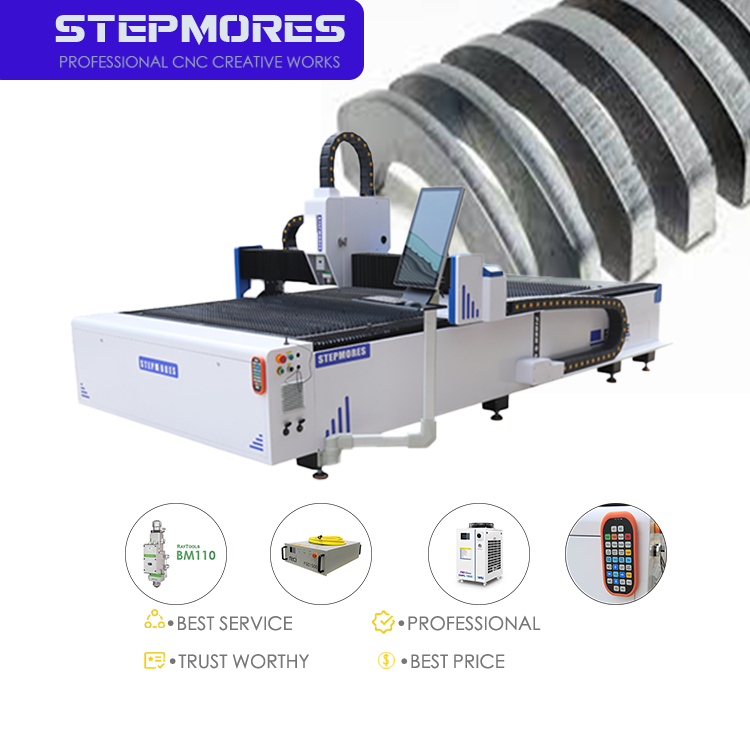
Accelerating Production with CNC Leather Cutting Machine Automation
40–60% faster cycle times vs. manual die‑cutting: Measuring throughput gains
Switching from manual die‑cutting to a CNC leather cutting machine delivers measurable, sustained throughput gains—reducing cycle times by 40–60%, according to 2023 industry productivity audits. This acceleration stems from three core advantages: high-speed oscillating knife travel (up to 60 m/min), elimination of time-intensive die changes, and the ability to process multiple plies in a single pass. Intelligent nesting software further compresses production time by optimizing pattern placement to minimize head travel and material handling. For a mid-size leather goods factory producing 1,200 bag panels per shift, a 50% reduction translates to nearly two additional hours of productive capacity daily—equivalent to 300 extra panels without added labor or floor space. Synchronized automated loading and unloading shrink inter-batch idle gaps to seconds, enabling tighter delivery windows, faster response to custom orders, and scalable output—all without compromising cut quality.
Eliminating human variability: Sub‑millimeter precision and repeatability across batches
Manual cutting—even by highly skilled artisans—introduces subtle but consequential variations in angle, pressure, and alignment. A CNC leather cutting machine replaces subjective judgment with deterministic control: closed-loop servo drives and high-resolution encoders maintain positioning accuracy within ±0.1 mm across every cut, from the first hide of the day to the thousandth. This sub-millimeter repeatability ensures dimensional consistency critical for downstream assembly—seams align precisely, edge-finishing operations proceed predictably, and final products meet brand specifications without rework. Vacuum hold-down systems prevent material shift during cutting, eliminating a key source of error in manual setups. The result is uniform, traceable quality that builds customer trust, reduces defect-related waste, and transforms leather cutting from a craft-dependent process into a repeatable, scalable manufacturing discipline.
Maximizing Material Yield via Smart Nesting and Multi-Layer Cutting
AI-powered nesting algorithms reduce raw material waste by 12–18%
AI-powered nesting software fundamentally improves material utilization by analyzing hide contours, natural defects, and grain direction in real time. Unlike static manual layouts, these algorithms dynamically optimize part placement to minimize gaps and offcuts—consistently reducing raw material waste by 12–18% compared to traditional methods. The system adapts to irregular hide shapes and flaw locations, ensuring every usable square centimeter is allocated efficiently. This data-driven approach directly lowers material costs and supports sustainability goals—without sacrificing speed or requiring operator expertise.
Simultaneous cutting of up to 8 layers of full-grain leather at ±0.1 mm tolerance
Multi-layer cutting multiplies the yield gains achieved through smart nesting. Advanced oscillating knife systems cut up to eight layers of full-grain leather simultaneously while maintaining ±0.1 mm positional tolerance—matching the precision of single-layer processing. This capability delivers up to 8× the throughput per cycle, eliminates re-trimming, and ensures dimensional identity across all layers. By reducing per-part handling time and preserving nesting efficiency across stacked hides, the machine drives scrap rates down while reinforcing consistency. The outcome is a leaner, more predictable workflow where material optimization and production speed reinforce each other.
Ensuring Consistent Quality with CNC Oscillating Knife Technology
Defect rate reduction: <2% vs. 8–12% in manual/semi-automated processes
CNC oscillating knife technology directly addresses the root causes of quality inconsistency. Unlike manual or semi-automated processes vulnerable to fatigue, misalignment, and inconsistent pressure, CNC-controlled knives deliver sub-millimeter precision (±0.1 mm) across thousands of cuts—slashing defect rates to under 2%, compared to the 8–12% typical in traditional workshops. The cold-cutting action prevents heat-induced edge discoloration or fiber degradation, while integrated vision registration compensates for material distortion. Automated path optimization ensures flawless execution of nested layouts. As a result, rework due to cutting errors drops dramatically, freeing skilled labor for value-added finishing tasks and delivering near-perfect parts batch after batch.
Scaling Operations Amid Labor Shortages Using Fully Integrated CNC Leather Cutting Machine Workflows
As skilled operator shortages persist, fully integrated CNC leather cutting workflows provide a proven path to scalable growth without proportional headcount increases. By unifying automated loading, vision-assisted alignment, and high-speed cutting, a single semi-skilled worker can manage a production cell that previously required multiple specialists. Job-queue management and preset tool paths eliminate the trial-and-error of manual layout—converting hours of artisan labor into minutes of machine uptime. Cloud-connected diagnostics and predictive maintenance flag potential issues before they cause downtime, reducing reliance on in-house technical expertise. With secure unattended operation overnight or on weekends, facilities absorb seasonal demand spikes or large-volume orders without scrambling for scarce craftsmen. Growth becomes constrained not by hiring bottlenecks—but by machine throughput—enabling manufacturers to meet rising demand for customized leather goods with consistent speed, quality, and operational resilience.
FAQ
What is the speed advantage of CNC leather cutting machines compared to manual methods?
CNC leather cutting machines cut cycle times by 40–60% due to high-speed oscillating knife travel and intelligent nesting software, enhancing production capacity without extra labor.
How do CNC machines ensure precision and batch consistency?
Closed-loop servo drives and high-resolution encoders provide sub-millimeter accuracy (±0.1 mm), ensuring dimensional consistency and eliminating human variability.
Can CNC leather cutting machines reduce material waste?
Yes, AI-powered nesting algorithms optimize hide utilization, reducing raw material waste by 12–18% while maintaining high speed and efficiency.
How do these machines handle multi-layer cutting?
CNC machines can cut up to 8 layers simultaneously with ±0.1 mm precision, preserving dimensional accuracy and scaling throughput without sacrificing quality.
How can CNC workflows address labor shortages?
Automated processes eliminate reliance on multiple specialists, enabling scalable growth through machine throughput, and allow unattended operation during off-hours.
Table of Contents
- Accelerating Production with CNC Leather Cutting Machine Automation
- Maximizing Material Yield via Smart Nesting and Multi-Layer Cutting
- Ensuring Consistent Quality with CNC Oscillating Knife Technology
- Scaling Operations Amid Labor Shortages Using Fully Integrated CNC Leather Cutting Machine Workflows
-
FAQ
- What is the speed advantage of CNC leather cutting machines compared to manual methods?
- How do CNC machines ensure precision and batch consistency?
- Can CNC leather cutting machines reduce material waste?
- How do these machines handle multi-layer cutting?
- How can CNC workflows address labor shortages?