
The Scrap Pile That Tells the Story
A few years back, the owner of a mid-sized custom cabinet shop in the Pacific Northwest decided to track his material waste for a month. The numbers stunned him. Of every five sheets of plywood that entered his shop, nearly one ended up as scrap. That is a 20% loss, not counting the labor spent cutting those unusable parts. He was essentially paying for five sheets but only getting four usable ones. The problem was not his team's skill; they were experienced craftsmen. The problem was the inherent limitation of manual layout. The human eye can only do so much when arranging dozens of irregularly shaped parts on a rectangular sheet. Offcuts that look too small for one part often are just big enough for another, but finding that match by hand is nearly impossible. This is the inefficiency that automated nesting machines were designed to eliminate.
How Nesting Software Works
Automated nesting software uses sophisticated algorithms to arrange parts on a sheet of material as tightly as possible. The software considers the actual shape of each part, not just its rectangular bounding box . It can rotate pieces, fit smaller components inside the cutouts of larger ones, and even nest parts into overlapping cutouts to minimize gaps . This "true shape nesting" process can increase material utilization by up to 10% compared to manual methods . The software also respects important constraints like grain direction, edge banding allowances, and tool clearance requirements. For veneered panels where grain orientation matters, the system restricts rotation to preserve the correct look. The result is a cutting plan that extracts the maximum value from every sheet that enters the machine. A piece that a human would discard as scrap might, in the optimized layout, become the perfect location for a smaller drawer component.
The Real-World Impact on the Shop Floor
The material savings are compelling, but the real impact goes deeper. One custom cabinet shop that installed a nesting machine found that its material utilization jumped from 78% to over 90%. That is a significant reduction in material cost, but it is not the only benefit. The machine also labels each cut part with a barcode, making sorting and assembly much simpler and less error-prone. The integration of design and manufacturing software means that a cabinet design created in CAD can be sent directly to the nesting software, which then generates the toolpaths and cutting instructions automatically. This eliminates the manual programming that slows down traditional production. The machine can also handle drilling, slotting, and grooving operations in the same cycle, reducing the need for secondary processing . The result is a streamlined workflow from design to finished parts that minimizes human intervention and maximizes consistency.
The Technology Behind the Efficiency
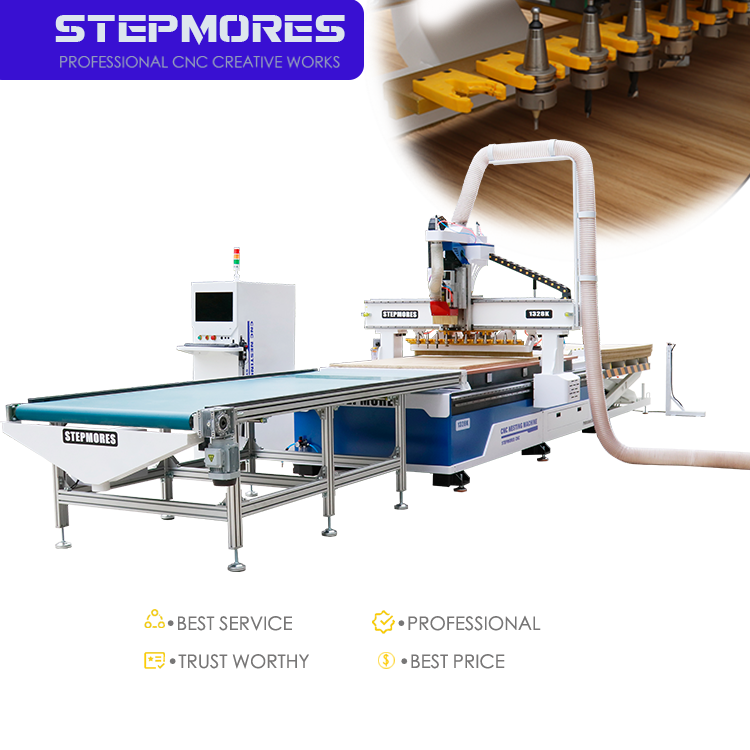
The performance of a nesting machine depends on several factors working together. The nesting software itself is critical, with the latest versions featuring True Shape Nesting engines that are significantly faster while also improving material yield . The machine's construction matters just as much. A rigid, welded steel frame with precision linear guides and servo motors ensures accurate movement and minimizes vibration during high-speed operation . A powerful vacuum table with zoning capability holds the sheet securely during cutting, preventing movement that would ruin parts or damage tooling. The machine must also be compatible with the shop's existing design software to enable seamless workflow integration. When these elements come together, the machine becomes a productivity multiplier that transforms how the shop operates.
The Business Case for Investment
For a custom cabinet shop, the decision to invest in a nesting CNC machine is significant. The return, however, comes from multiple sources. The improved material utilization directly reduces the cost of sheet goods. The automation eliminates the need for manual cutting and labeling, reducing labor costs. In a typical shop, the time spent on manual layout, cutting, and labeling can be substantial. The accuracy of the cuts also reduces rework, because parts fit together perfectly the first time. For shops that produce high volumes of cabinets, the payback period can be measured in months rather than years. One shop manager calculated that the nesting machine paid for itself in 14 months through material savings alone, before factoring in the labor savings and reduced rework. The operational benefits are clear, but they rely on the machine's reliability and the support behind it.
The Role of a Reliable Equipment Partner
The performance of a CNC nesting machine depends heavily on the quality of its construction and the responsiveness of its support team. STMCNC has been designing and building CNC equipment for over fifteen years, supplying machines to workshops in more than sixty countries worldwide. Their nesting machines feature heavy-duty welded steel frames for rigidity, high-precision linear guides from reputable suppliers, and robust servo motor systems for accurate and smooth movement. They also offer powerful vacuum tables and zoning systems to hold various sheet sizes securely. With a dedicated research and development department and strict quality control procedures, STMCNC ensures that every machine is built for consistent, reliable performance. For a cabinet shop looking to turn material waste into profit and streamline its production workflow, choosing a partner with proven engineering expertise and a global support network is essential to ensuring the investment delivers lasting returns.