
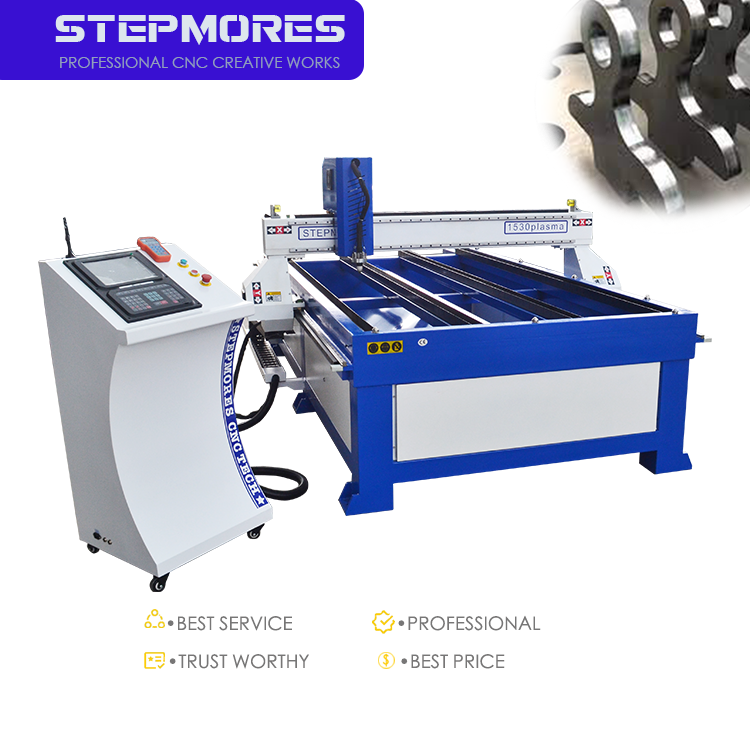
How Oscillating Knife CNC Works: Precision Through Dynamic Blade Control
High-frequency oscillation and real-time depth modulation mechanics
The oscillating knife CNC system features a vertical blade that moves back and forth at an impressive rate of between 15,000 to 20,000 strokes every minute. Compared to traditional drag knives, these systems create about 60% less sideways friction during operation. The result? Cleaner cuts with much less distortion to the material being processed. The cutting depth is controlled by a servo driven Z axis that adjusts in real time with amazing accuracy (within plus or minus 0.05 mm). This adjustment happens simultaneously with the movement along the X and Y axes. Special load sensors built into the machine pick up changes in material thickness and composition. When working with tricky materials like layered composites or foam products with inconsistent thickness, the system automatically modifies blade pressure to avoid problems like tearing or unwanted compression. With this kind of smart feedback loop, operators can run jobs continuously even on difficult materials such as reinforced silicone sheets without constant monitoring.
Advantages over static blades and laser cutting: zero thermal damage, no material warping, superior edge integrity
- Zero thermal distortion: Eliminates heat-affected zones inherent to laser processing, preserving the physical and chemical properties of temperature-sensitive materials—including medical foams, elastomers, and thin polymer films
- No compression warping: Oscillation prevents lateral force buildup, avoiding the material displacement common with static blades and ensuring dimensional fidelity in nested parts
- Sealed edges: Micro-crimps textile and coated fabric edges during cut, reducing fraying by 80% compared to conventional die cutting
- Tooling flexibility: Processes materials from 0.1–12 mm thick without manual tool changes—unlike router-based CNC, which requires bit swaps for thickness transitions
- Material efficiency: Achieves up to 92% utilization in optimized nesting layouts, outperforming laser systems by 17% (AMRA 2023)
Materials Optimized for Oscillating Knife CNC Cutting
Thickness and tolerance benchmarks across 37 flexible material classes (0.1–12 mm)
The oscillating knife CNC machine can handle materials with remarkable consistency, keeping tolerances within about 0.1 mm across no fewer than 37 different flexible material types ranging from very thin films all the way up to thick composite materials measuring between 0.1 mm and 12 mm in thickness. What makes this system stand out is its ability to adjust cutting depth on the fly, which means it can switch effortlessly from working on something as delicate as 0.15 mm polyester insulation to tougher stuff like 12 mm laminates without missing a beat. When dealing specifically with medical grade silicones, the machine actually holds onto repeatability down to around 0.05 mm, so there's generally no need for extra finishing work after the initial cut. We've run tests on this thing and seen some pretty impressive results in practice.
- Polymer sheets: ≤0.12 mm deviation in 5 mm PVC
- Laminated textiles: ±0.08 mm accuracy through 8-layer stacks
- Cellular foams: No measurable compression in 10 mm polyurethane
Critical performance trade-offs: elastomers (e.g., Santoprene®), foams, composites, and coated textiles
Optimizing cuts across diverse materials demands tailored parameter tuning—not just blade selection. Santoprene® and similar thermoplastic elastomers require oscillation rates ≥8,000 RPM to suppress edge tearing during stretch recovery; low-density foams need reduced downward pressure to avoid collapse. Composite materials introduce nuanced constraints:
- Coated textiles: Demand specialized blade geometries (e.g., narrow-angle bevels) to minimize delamination risk
- Fiber-reinforced sheets: Require slower feed rates to preserve fiber alignment and structural continuity
- Elastomers: Rely on dynamic depth modulation to accommodate elastic rebound without overcutting
Coated fabrics demonstrate 23% better edge retention than laser-cut equivalents in standardized abrasion testing—but moisture content must remain tightly controlled (<45% RH) during processing. Aerospace-grade composites achieve 0.03 mm superior dimensional stability versus lasers but necessitate scheduled blade replacements every 8–10 hours to sustain tolerance compliance.
Industry Applications Driving Adoption of Oscillating Knife CNC
Automotive interiors: leather, headliner foam, and gasket cutting with 42% faster cycle times vs. laser (AMRA 2023)
The oscillating knife CNC has become pretty much standard equipment in Tier 1 automotive interior manufacturing these days when it comes to cutting materials like leather, those acoustic headliner foams, and various multi-layer elastomeric gaskets. What makes this technology stand out is its cold cutting feature that gets rid of thermal distortion issues which can really mess up the fit and finish of parts sensitive to temperature changes. Seat ventilation membranes and HVAC ducting are prime examples where this matters most. When dealing with complex shapes, manufacturers typically achieve tolerances around plus or minus 0.2 mm. According to the AMRA 2023 benchmark study, production speeds using oscillating knives are about 42% faster compared to laser options. This speed advantage becomes even more pronounced when working with stacked gasket applications. The clean cuts produced without compression help prevent fluid leaks and significantly cut down on the need for rework later on.
Aerospace composites and medical device packaging: regulatory compliance and repeatability requirements
Oscillating knife CNC technology really shines in regulated settings where consistency matters most. The machine delivers cuts that are basically identical every time, which is what industries need when precision counts. Take aerospace manufacturing for instance - the ability to program depth settings lets engineers separate carbon fiber layers without damaging them between layers. This works hand in hand with FAA AC 20-107B guidelines and EASA's CS-25 requirements for structural integrity. When it comes to medical device packaging, there's no heat generated during cutting so there are no pesky particulates or VOCs floating around. That means these machines fit right into ISO Class 5 cleanrooms. Plus, those tiny crimped edges stay sealed even after multiple sterilizations. Real world testing shows that over runs of 10,000 units, we consistently hit about 99.8% accuracy on dimensions. That's within the 0.1 mm tolerance needed for things like aircraft insulation kits and surgical trays, which makes all the difference in quality control.
Digital Dieless Flexibility: Multi-Tool Heads and Smart Tool Change Optimization
The oscillating knife CNC system brings about real digital dieless manufacturing through those multi-tool heads which actually combine oscillating knives along with creasing wheels, perforation tools and scoring modules all in one unit. What makes these systems stand out is their smart approach to changing tools. The system basically predicts when to switch between different cutting implements so there's hardly any downtime during operation and no need for workers to constantly adjust settings manually. For manufacturers dealing with lots of different products but not huge quantities of each, this kind of automation is a game changer. It lets them switch from one material type to another pretty quickly without compromising on things like clean edges, accurate measurements or damaging the base material itself. Operators can walk away knowing the machine will handle most tasks independently once it gets going.
FAQ Section
What is an oscillating knife CNC machine?
An oscillating knife CNC machine is a precision cutting tool that uses a blade that moves back and forth rapidly to cut materials. It reduces friction and distortion, providing cleaner cuts without compromising the integrity of the material.
How does oscillating knife CNC compare to laser cutting?
Oscillating knife CNC eliminates heat-related distortions and offers cleaner edges with sealed finishes. It also provides material efficiency in nesting layouts and the capability to process a range of materials with varying thickness without manual tool changes.
Which materials are suitable for oscillating knife CNC cutting?
This technology is optimized for a variety of flexible materials, including polymer sheets, laminated textiles, cellular foams, and composites, accommodating thicknesses from 0.1 to 12 mm with exceptional repeatability and tight tolerance levels.