
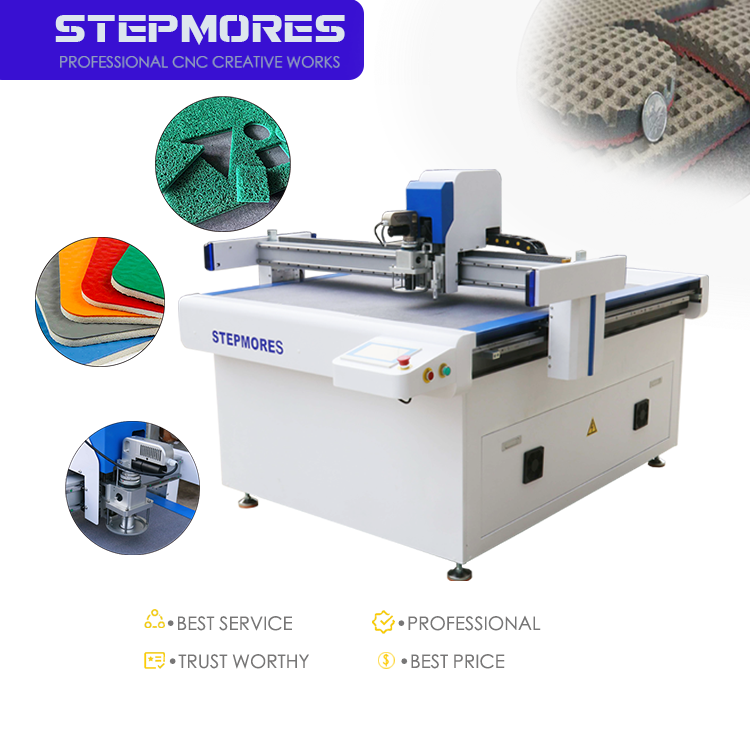
Match CNC Router Capabilities to Your Production Needs
Assessing Daily Part Volume and Complexity to Avoid Under- or Over-Specifying
Accurately assessing your daily part volume and complexity prevents costly mismatches between CNC router capabilities and production demands. Analyze peak production cycles and material thickness requirements: operators cutting 3D hardwood carvings daily need spindle power above 15 HP and rigid frames, while flat-panel shops processing 100+ sheets daily benefit most from rapid tool changers and high-speed feed systems. Under-specifying leads to missed deadlines and tool breakage—especially when routing dense hardwoods like maple (Janka 1450 lbf)—while over-specifying wastes capital on unused servo capacity, often exceeding $40,000. Track average part dimensions, batch sizes, and material hardness to identify machines with an optimal work envelope (4'×8' remains the commercial woodworking standard) and torque curves aligned with your median workload.
Why Hobby-Grade CNC Routers Fail Commercial Workloads: Duty Cycle, Rigidity, and Thermal Management
Hobby-grade CNC routers consistently fail in commercial environments due to three critical engineering limitations: insufficient duty cycles, frame instability, and thermal drift. Unlike industrial routers engineered for 18-hour daily operation, hobby machines typically tolerate only 3–4 hours before stepper motors overheat—a leading cause of missed steps in 74% of premature failures (Woodworking Tech Journal 2023). Aluminum extrusion frames flex during aggressive hardwood cutting, causing dimensional inaccuracies exceeding 0.5 mm versus commercial-grade welded steel’s 0.02 mm tolerance hold. Spindle bearings without liquid cooling experience thermal expansion during continuous use, introducing Z-axis drift that compromises joinery precision. These compromises become economically unsustainable when scrap rates exceed 12%, justifying investment in commercial-grade rigidity and thermal management.
Optimize CNC Router Performance for Wood-Specific Applications
Dust Extraction Integration and Variable-Speed Spindle Control for Consistent Cut Quality
Woodworking demands specialized CNC router configurations to maintain precision across production cycles. Integrated dust extraction is non-negotiable—sawdust accumulation causes dimensional inaccuracies in 78% of poorly equipped shops (Woodworking Safety Council 2023) by obstructing cutting paths and accelerating component wear. Closed-loop vacuum systems with 4-inch-diameter hoses capture debris at the source, preserving bearing integrity and improving operator visibility. Meanwhile, variable-speed spindles (8,000–24,000 RPM) enable real-time adjustments: slower speeds prevent burning in hardwoods like maple, while higher RPMs improve edge quality on composites and fine engraving. This dynamic control eliminates tear-out in veneered surfaces and sustains ±0.005-inch tolerances across batch runs—directly reducing finish rework and reject rates.
Evaluate Core Hardware Reliability of the CNC Router
The long-term precision and uptime of a CNC router depend on three core hardware components: the frame, the drive system, and the spindle. Each directly affects cut quality, maintenance frequency, and total lifecycle cost. A woodworking shop must evaluate these elements against its specific production loads to avoid costly downtime or premature failure.
Frame Material, Drive System, and Spindle Type: Impact on Precision, Uptime, and Lifecycle Cost
Frame rigidity determines resistance to deflection under cutting forces. Welded steel frames deliver superior stiffness compared to aluminum extrusions, minimizing vibration and maintaining tight tolerances over years of use. A less rigid frame introduces chatter, reduces tool life, and increases reliance on secondary finishing. The drive system—rack-and-pinion versus ball screw—affects repeatability and speed: ball screws offer higher positional accuracy but require more frequent lubrication; rack-and-pinion suits larger work areas and higher feed rates. Spindle choice is equally critical: a high-frequency, air-cooled spindle rated for continuous duty maintains consistent performance in commercial woodworking without thermal drift. Investing in a quality spindle can cut replacement costs by half over three years. Together, these choices define whether the machine delivers reliable output under daily production schedules.
When an Automatic Tool Changer Justifies Its Premium for Small Woodworking Shops
An automatic tool changer (ATC) adds several thousand dollars to the purchase price but pays for itself in high-mix environments. If your shop regularly switches between bits for profiling, drilling, and edge work, an ATC cuts tool-change downtime from minutes to seconds. For example, a shop running 20 parts per day with four tool changes per part saves roughly 45 minutes daily—over 180 hours annually. However, if you run repetitive jobs with the same few tools, the premium may not be justified. Map your actual tool-change frequency against labor cost to assess ROI. Note that ATCs require additional programming expertise and routine maintenance—so weigh upfront expense against projected throughput gains. For small woodworking businesses scaling up production, the ATC often becomes a strategic, not just operational, investment.
Secure Long-Term CNC Router Reliability Through Support and Service Infrastructure
Investing in a CNC router is a long-term commitment—the machine’s ongoing reliability depends heavily on the vendor’s support infrastructure. Prioritize suppliers offering on-site installation, hands-on operator training, and responsive technical support. A warranty covering parts and labor for at least two years provides essential protection against unexpected failures. Regular maintenance programs—including scheduled inspections, lubrication, and calibration—prevent minor issues from escalating into costly downtime. Crucially, ensure the supplier maintains local inventory of critical spare parts: without ready access to replacement spindles, drives, or controllers, even simple repairs can stall production for days. By securing a robust support and service agreement, you protect your investment and sustain consistent productivity for years to come.
FAQs
Why is it important to match CNC router capabilities to production needs?
Matching CNC router capabilities to production needs ensures that the machine meets the daily demands of your workload without under- or over-specifying, which can lead to delays, tool damage, or excessive costs.
What are the critical limitations of hobby-grade CNC routers?
Hobby-grade CNC routers typically fail in commercial settings due to insufficient duty cycles, unstable frames, and lack of thermal management, which negatively impact precision and performance over extended use.
Why is dust extraction critical for woodworking CNC routers?
Integrated dust extraction reduces sawdust accumulation, prevents component wear, and improves cutting precision and safety, which are critical for maintaining quality in woodworking projects.
How do frame material and drive system affect CNC router precision?
Welded steel frames provide better rigidity and long-term precision, while drive systems like rack-and-pinion or ball screws impact accuracy and speed based on workload requirements.
When is an automatic tool changer worthwhile for a small woodworking shop?
An ATC is worthwhile in high-mix environments with frequent tool changes, as it reduces downtime significantly, improving overall productivity. However, it may not be justified for repetitive tasks with minimal tool changes.
Table of Contents
- Match CNC Router Capabilities to Your Production Needs
- Optimize CNC Router Performance for Wood-Specific Applications
- Evaluate Core Hardware Reliability of the CNC Router
-
FAQs
- Why is it important to match CNC router capabilities to production needs?
- What are the critical limitations of hobby-grade CNC routers?
- Why is dust extraction critical for woodworking CNC routers?
- How do frame material and drive system affect CNC router precision?
- When is an automatic tool changer worthwhile for a small woodworking shop?